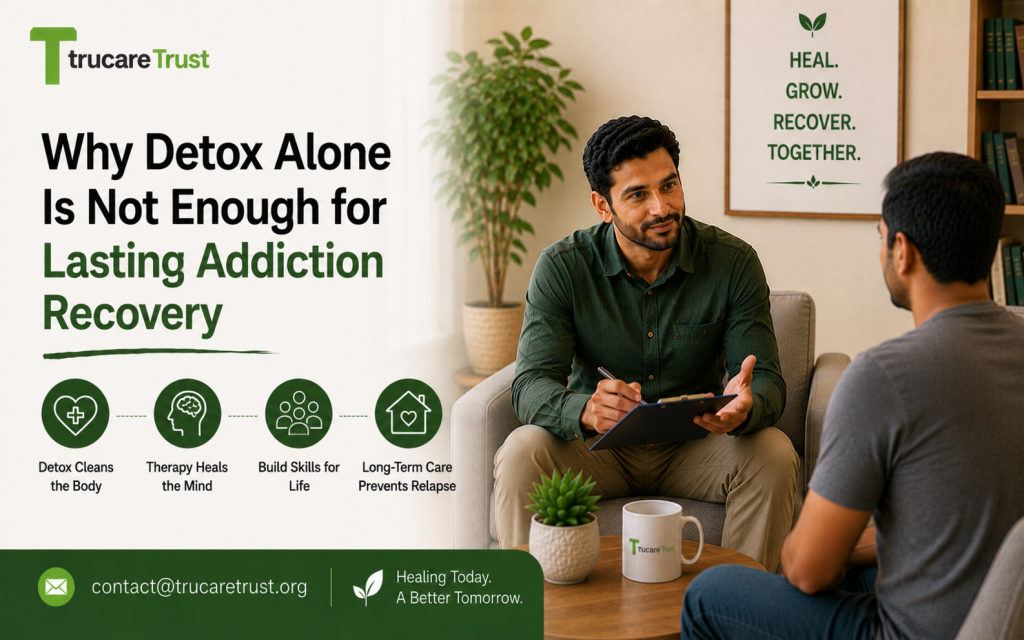
Detoxification is often the first visible step in addiction treatment, but it is not a complete recovery programme. Families seeking the best addiction treatment in Mumbai should examine what happens after withdrawal, because lasting improvement depends on therapy, practical skill-building, family preparation and continuing care.
What Detoxification Actually Does
Detox helps the body clear alcohol or drugs while withdrawal symptoms are monitored and managed. A qualified clinician may prescribe medication, assess hydration and nutrition, and respond to complications.
Withdrawal differs by substance. Alcohol and sedatives can cause seizures, hallucinations or severe confusion. Opioids may produce pain, vomiting, diarrhoea and intense cravings. Stimulant withdrawal can involve exhaustion, depression or suicidal thoughts.
Safe detoxification matters, but its purpose is physical stabilisation. It does not automatically change the reasons a person uses substances.
Many people benefit from transitioning into luxury substance abuse treatment after detox, where they can receive ongoing therapy, personalized care, and structured support that addresses the underlying causes of substance use and helps build long-term recovery skills.
Cravings and Triggers Remain
After withdrawal settles, familiar stress, conflict, loneliness, trauma or access to substances can reactivate the urge to use. People may still associate certain places, friends, emotions or times of day with alcohol or drugs.
Without identifying these patterns, the person can leave detox physically stable but unprepared for the first high-risk situation. Counselling helps connect triggers with practical alternative responses.
Behavioural Skills Need Practice
Cognitive and behavioural approaches can strengthen craving management, problem-solving, refusal skills and emotional regulation. Motivational methods help the person clarify personal reasons for change without confrontation.
These abilities are not learned through information alone. Residents need opportunities to practise handling offers, managing money, leaving risky settings and contacting support before use occurs.
Treatment must also carefully prepare the person for ordinary responsibilities. Work pressure, money, relationships and social events can quickly expose weaknesses in an unrealistic plan. Practising responses well before discharge helps convert treatment ideas into usable skills. Reviews should identify which situations still feel unmanageable and what additional support is required.
Mental Health May Require Treatment
Depression, anxiety, trauma, psychosis or attention difficulties may contribute to substance use or become more visible after detox. These conditions require assessment by qualified professionals. Ignoring them can increase distress and relapse risk.
Medication may support recovery from certain substance-use disorders or treat a diagnosed psychiatric condition. It should be prescribed and reviewed according to individual need.
Families and Environment Matter
Returning to a home where substances are easily available, conflict is severe or close contacts continue using can undermine progress. With consent, family sessions can address boundaries, communication, financial enabling and warning signs.
Support may include treatment costs, food, transport and stable routines. It does not require unmonitored cash, constant surveillance or repeatedly hiding serious consequences.
Aftercare Protects Early Progress
A discharge plan should specify counselling, medication reviews, peer support, emergency contacts and responses to cravings or lapses. Sleep disruption, missed appointments, isolation and renewed contact with using peers deserve early attention.
Reduced tolerance after opioid abstinence creates a particular danger. Returning to a previously used dose can cause fatal overdose. Families should discuss overdose prevention with qualified clinicians.
The World Health Organization and United Nations Office on Drugs and Crime describe effective addiction care as evidence-based, individualised and continuous across services.
When comparing the best addiction treatment in Mumbai, families should look beyond a comfortable detox. Responsible treatment connects medical stabilisation with therapy, mental-health care, family preparation, relapse prevention and long-term follow-up.