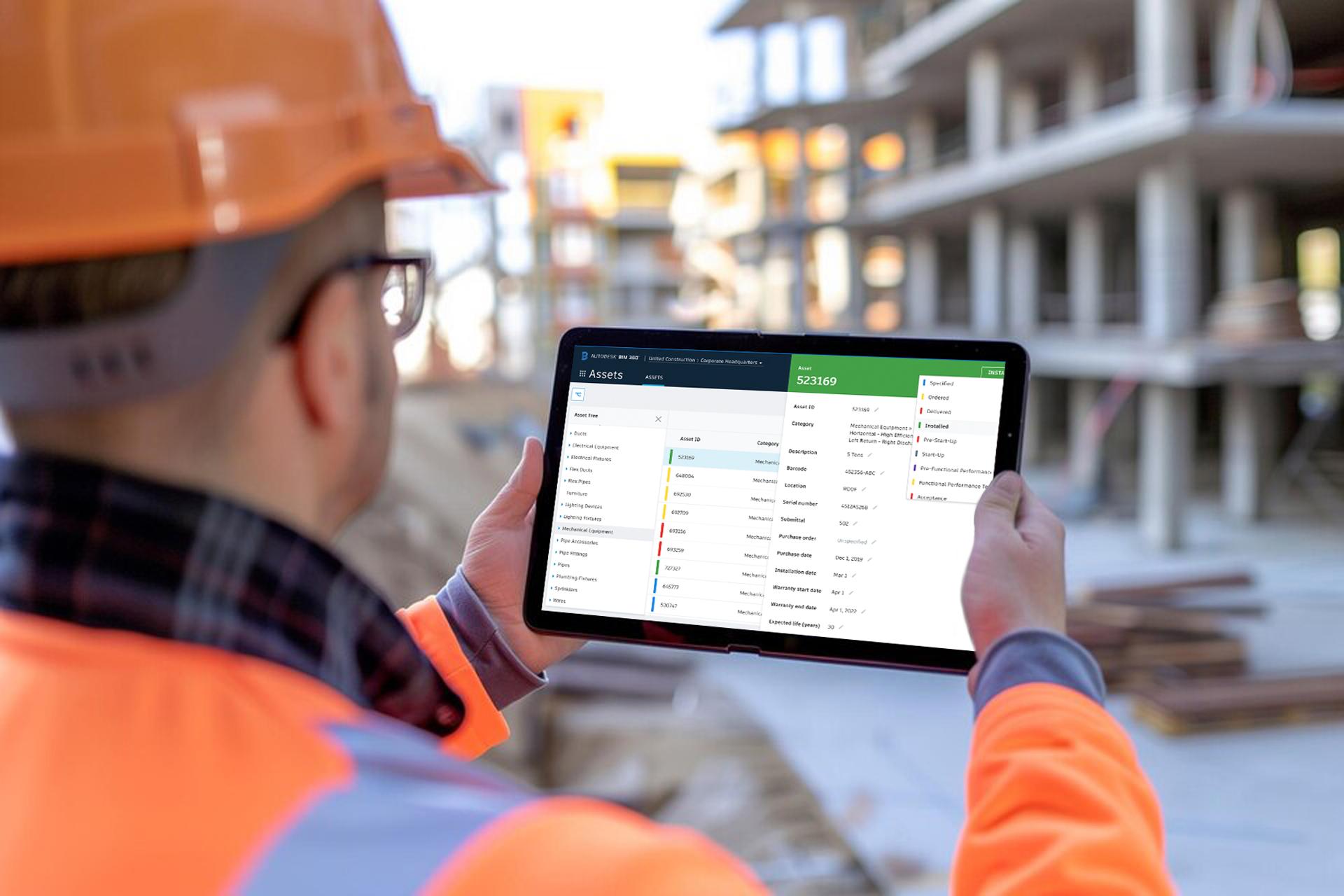
Quantity takeoffs sit at the center of every reliable construction budget. Get the counts wrong, and the estimate starts to drift. Miss a finish. Double-count a wall. Understate the length of a run. Those mistakes look small on paper, but they grow fast once the job starts buying material and placing crews. That is why digital modeling has become so important. When the model is structured properly, it gives estimators measurable data instead of scattered assumptions, and that changes the quality of the budget from the start. Recent BIM-based quantity takeoff research continues to show that model-driven quantities are faster to extract and more reliable than manual takeoff when the model is clean and well-maintained.
The practical value is simple. Instead of rebuilding the same counts from drawings every time a revision comes in, the team works from one live source of truth. That cuts down on transcription errors, saves time, and makes it easier to compare options before money is locked in. It also helps owners and contractors make better decisions earlier, when design changes are still cheap. Autodesk and Procore both describe BIM-driven takeoff as a way to support more accurate pricing, better coordination, and faster decision-making in preconstruction.
The model has to be measurable before it can be priced.
BIM Modeling Companies matter because they turn design into something estimators can measure. A good model is not just a 3D picture. It is a data set with geometry, attributes, and structure. Every object should be named clearly. Every unit should make sense. Every element that affects price should carry enough information to be counted correctly. If the model is incomplete or messy, the estimate inherits that mess. Research on BIM-based quantity takeoff keeps pointing to the same issue: model quality is the gatekeeper. Better structure means better counts, while incomplete compound elements can produce inaccurate quantities if nobody checks them.
A model that is ready for takeoff usually has a few non-negotiable basics:
- consistent family and element naming
- meaningful material and finish data
- units that match the estimating workflow
- trade separation so scopes do not blend
- clean exports in IFC, CSV, or another shared format
That sounds basic because it is. But basic discipline is what keeps budgets from slipping later.
What recent BIM research says about accuracy and control
| Reported effects from recent studies | What it means in practice | Why it matters for takeoff |
| Timeline reduction | 20% faster delivery in a 2025 case study | Less waiting between model updates and pricing |
| Cost reduction | 15% lower project cost in the same case study | Better control over budget movement |
| Design errors reduced | 30% fewer errors | Fewer corrections in takeoff and procurement |
| RFIs reduced | 25% fewer RFIs | Less back-and-forth before pricing |
| Waste reduction | 4.3% to 15.2% in a 2024 review, with one reported case at 56% | Less over-ordering and disposal loss |
These are reported study results, not universal averages. They show the direction of impact when BIM is used well, but it is not a guaranteed outcome for every project.
Why accurate takeoffs affect every trade differently
A takeoff error does not hit every trade the same way. Structural work can absorb a small change in one place and still stay stable. Interior finishes often cannot. Mechanical, electrical, and plumbing systems are especially sensitive because their routes depend on clearances, coordination, and sequence. A missed opening or a late clash can force reroutes, and reroutes cost labor, material, and time. That is why the model is so useful across disciplines: it lets each trade work from the same geometry, the same dimensions, and the same coordinated reference. Studies on BIM quantity takeoff improvement show that clash information can be used to remove excess quantities and add missing quantities, which is one reason model-based estimating usually outperforms hand-measured takeoff in complex projects.
Trade-by-trade risk matrix for takeoff accuracy
| Trade area | Common takeoff risk without BIM | BIM advantage | Cost-control result |
| Structural | Hidden openings, wrong layer counts | Measured assemblies and better coordination | Fewer quantity misses |
| Mechanical | Route clashes and access problems | Spatial coordination before installation | Less rework and fewer RFIs |
| Electrical | Overlapping runs and late changes | Clear routing and object counts | Cleaner pricing |
| Interiors | Finish overlaps and allowance gaps | Room-by-room quantity clarity | Better finish pricing |
| Site and civil | Area and volume confusion | Accurate surface and volume data | Better material planning |
This is where design coordination becomes financial control. If the takeoff is wrong, the estimate will be wrong. If the takeoff is clean, the estimate has a much better chance of holding up through procurement and construction.
Turning model counts into budgets that can actually be used.
A quantity is only the beginning. It becomes a budget when someone prices it with labor, material, equipment, waste, and sequence in mind. That is the job of Construction Estimating Service. A good estimator does not simply multiply quantities by rates. They test how the work will actually happen in the field. They think about access, staging, productivity, weather, lead times, and how one trade affects another. Procore defines construction estimating as the process of calculating all required direct and indirect project costs, and Autodesk’s estimating materials note that model data can support early cost planning and more accurate quantity extraction inside BIM workflows.
That matters because a model may tell you the project contains 18,400 square feet of interior partitions, but it will not tell you whether those partitions sit in an easy-open shell or a cramped retrofit with stair-only access. The estimator’s job is to bridge that gap. With cleaner quantities, the estimator can spend more time on the real questions: labor productivity, sequencing, procurement, and contingency. That is where the estimate becomes more than arithmetic and starts becoming a plan.
Illustrative calculation: how small waste gains turn into real money
Example only — not a market average.
Assume a $12,000,000 project with a $4,800,000 material budget.
| Item | Traditional approach | BIM-led approach | Difference |
| Material waste | 5% of $4,800,000 = $240,000 | 4.3% reduction in waste = $229,680 | $10,320 saved |
| Material waste | 5% of $4,800,000 = $240,000 | 15.2% reduction in waste = $203,520 | $36,480 saved |
| Rework from late coordination | $60,000 | $36,000 | $24,000 saved |
| Rush delivery fees | $18,000 | $6,000 | $12,000 saved |
| Estimated total impact | $46,320 to $72,480 saved |
The point is not that every project saves exactly this amount. The point is that small percentage improvements matter once they are multiplied across a real budget.
How BIM reduces waste and rework in the real world
Sustainability and cost control are now linked. Less waste usually means less cost. Better coordination usually means less rework. Better material planning usually means fewer truck trips and fewer emergency buys. A 2024 review found that BIM can help forecast waste more credibly and can support lower waste during design validation; the same review reported waste reductions ranging from 4.3% to 15.2%, with one cited case showing a 56% reduction. A 2025 case study also reported lower design errors, lower RFIs, and lower overall cost when BIM was used as part of project coordination.
That kind of improvement shows up trade by trade:
- Structural teams get clearer counts for steel and rebar
- MEP teams catch clashes before installation
- interior teams order finishes from measured room data
- Site teams plan material deliveries with less over-ordering
Where BIM saves money across trades
| Trade group | Common waste or cost pressure | BIM advantage | Typical result |
| Structural | Over-ordering steel or rebar | Better quantity precision | Lower excess material |
| MEP | Clashes, reroutes, access issues | Coordination and clearance checks | Less rework |
| Interiors | Cut waste and damaged stock | Exact surface measurement | Less scrap |
| Site logistics | Storage, double handling, damage | Just-in-time planning | Lower handling loss |
This is also why BIM is no longer treated as a presentation tool. It is part of operational planning. It helps the project team buy less waste, handle less waste, and pay for less waste.
Where repair and claims work require a different language
Some projects do not stop at new construction. Restoration, insurance claims, and repair-heavy scopes often need an estimate that can be reviewed line by line by an outside party. That is where Xactimate Estimating Services fit naturally. Verisk describes Xactimate as property claims estimating software that is precise, fast, and flexible, and its pricing services are built around independently researched regional pricing data. The value is in the structure: labor, material, and equipment can be separated clearly, and the estimate can be explained in a format that adjusters and owners already understand.
That structure matters in damage and repair work because the scope changes quickly. Hidden damage appears after demolition. Moisture or fire damage often affects more than the first room the crew enters. When a verified model supports the scope, and Xactimate supports the presentation, the estimate is easier to trust and easier to approve. Verisk’s workflow tools also show why standardized claims data helps teams catch errors faster and benchmark performance across jobs.
A practical workflow that keeps takeoffs honest
A model-driven estimating process does not need to be complicated. It needs to be repeatable.
- Define naming, LOD, and unit rules at kickoff.
- Build the model with estimation in mind, not just presentation in mind.
- Run a sample takeoff early and compare it with field reality.
- Update quantities at each major design milestone.
- Price affects lines before design decisions are locked.
- Keep one mapping file between model families and cost codes.
- Use structured reporting where outside reviewers need it.
That process sounds simple. It is. But simple discipline is usually what separates a budget that behaves from a budget that keeps drifting.
Final thought
Accurate takeoffs do not start with pricing. They start with a model that can be measured cleanly. When BIM Modeling Services provide a reliable model, when Construction Estimating Services turn those counts into a workable budget, and when Xactimate Estimating Services are used for claims or repair work that needs a standardized format, the project gets a clearer path from design to cost. The result is not perfect certainty. Construction does not work that way. The real gain is control: fewer surprises, cleaner procurement, less waste, and a budget that is far more defensible from the first estimate to the final closeout.
FAQs
1. How early should estimators get involved in BIM-based takeoffs?
As early as possible, ideally once the model has a stable geometry and naming standards. Early estimator involvement helps catch price risks before design becomes expensive to change.
2. What part of BIM most improves takeoff accuracy?
The biggest gain comes from model quality: correct element naming, useful metadata, and clean exports. Research shows that incomplete or poorly structured models can reduce takeoff accuracy, especially for compound elements.
3. When is Xactimate useful in construction work?
It is most useful in claims, restoration, and repair scopes where a standardized, auditable line-item estimate is needed. Verisk positions it specifically for property claims estimating and related pricing workflows.