We all ask questions in our daily lives. But sometimes, it can be tricky to figure out how to ask them correctly. One type of question that often confuses people is the “either or” question. These questions are common, but they can cause some confusion, especially when you’re not sure when to use them.
In this article, you’ll learn how to properly ask and answer “either or” questions. We’ll explain what they are, where mistakes happen, and how to avoid them. Whether you’re a beginner or an ESL learner, we’ll walk you through everything in simple terms. By the end, you’ll be able to use “either or” questions confidently, both in casual conversations and formal writing.
Either Or Questions – Quick Answer
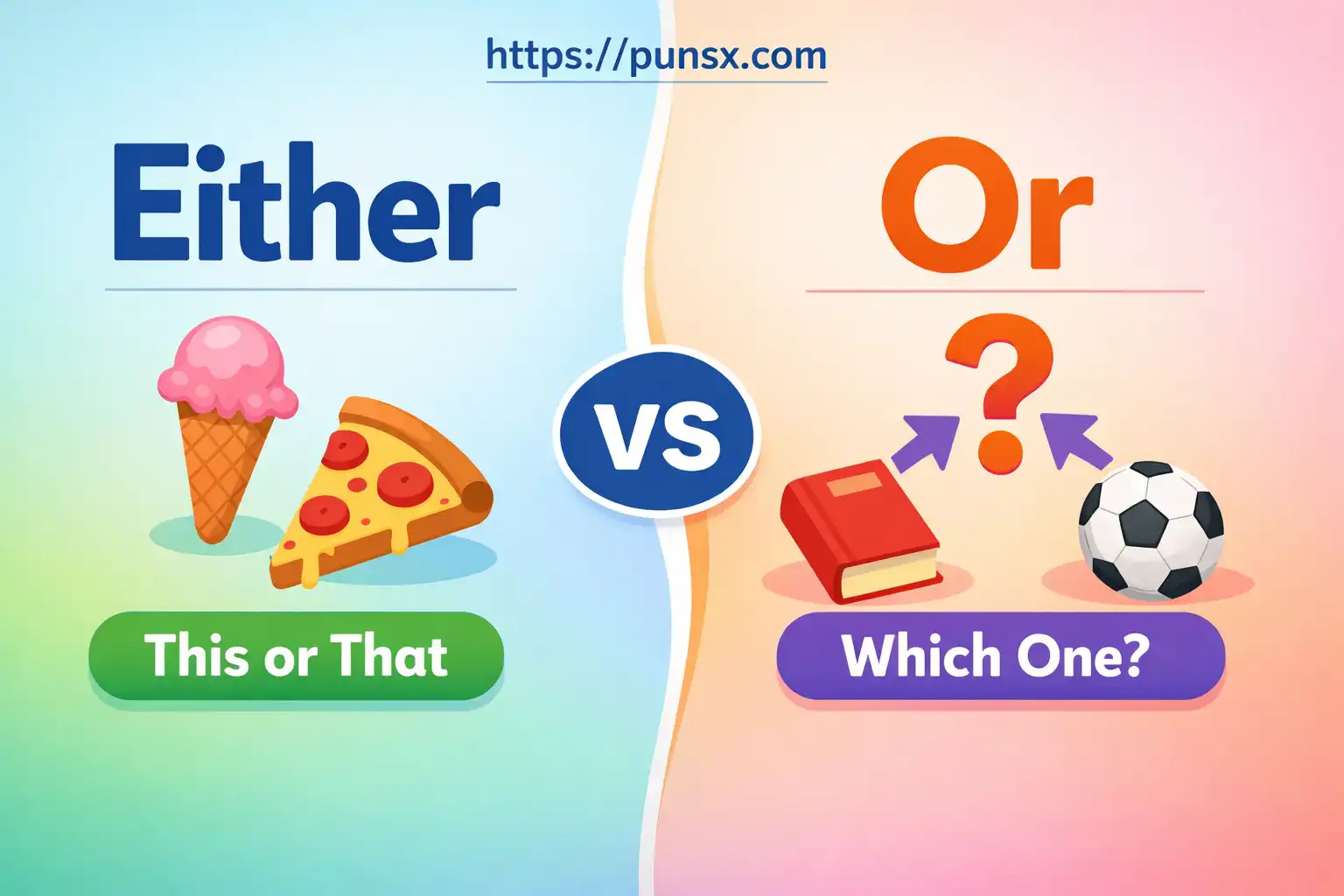
- An “either or” question offers two options to choose from.
- Example: “Do you want either coffee or tea?”
- Rule: Use “either or” when asking someone to choose between two options.
The Origin of Either Or Questions
The phrase “either or” comes from Old English, with “either” meaning “each of the two,” and “or” being a conjunction to introduce a choice. The combination “either or” gives us the ability to ask about two distinct options, which is quite useful in both everyday conversation and formal decision-making.
Reason for Confusion Today
Many people mistakenly use “either or” with more than two options. For example, “either or pizza, pasta, or salad” is incorrect. You should only use “either or” when you present two choices. Misusing it with multiple choices can confuse the reader or listener.
British English vs American English Spelling
“Either or” is used the same way in both British and American English. The only difference is that “either” may be pronounced differently in some regions: in the UK, it might sound like “ee-thur,” while in the US, it’s often pronounced “ai-thur.” But no matter the accent, the usage remains consistent.
Which Spelling Should You Use?
- For US: Either is pronounced “ai-thur,” but usage remains the same.
- For UK/ Commonwealth: Either is pronounced “ee-thur.”
- Global or professional writing: Stick with the simple rule of “either or” when asking someone to pick between two things.
Common Mistakes with Either Or Questions
Many people make common mistakes with “either or” questions. Let’s look at a few.
- ❌ Incorrect: “Either pizza, pasta, or salad?”
- ✅ Correct: “Do you want either pizza or pasta?”
- Explanation: You should only give two options after “either or.”
- ❌ Incorrect: “Would you prefer either studying English, French, or Spanish?”
- ✅ Correct: “Would you prefer either English or French?”
These examples show that adding too many options to “either or” is incorrect. Only two choices should follow this structure.
Either Or Questions in Everyday Examples
Here are a few examples showing how “either or” works in real life.
- Emails: “Would you prefer either the morning or afternoon for our meeting?”
- News: “Either the Prime Minister or the President will speak at the conference today.”
- Social media: “Which do you prefer? Either coffee or tea?”
- Professional writing: “You may either submit your report by email or in person.”
These examples demonstrate how to use “either or” in both formal and informal settings.
Either Or Questions – Usage Patterns & Search Interest
Many ESL learners search for explanations about “either or” because it’s often confusing. Misunderstanding this structure can make communication unclear. Writers may ask questions with too many options, leading to confusion. When learners understand the rule, they can improve their grammar and clarity.
One common real-world scenario where misuse occurs is in customer service emails. For example, a support agent might write, “Would you prefer either a refund, exchange, or store credit?” This mistake can make the sentence difficult to read. The correct version should only have two options: “Would you prefer either a refund or an exchange?”
Comparison Table
| Meaning | Part of Speech | Context of Use | Formal vs Informal | Common Mistakes | Correct Example |
| Two options to choose from | Conjunction | Casual conversations, emails, etc. | Both | More than two choices after “either or” | “Do you want either tea or coffee?” |
| Formal decision-making | “Would you prefer either option A or B?” |
Semantic FAQs
- Is “either or” the same as “or”?
- No, “either or” is used for two distinct choices, while “or” can be used for more than two.
- Which one is correct in formal writing?
- “Either or” is correct in formal writing when offering a choice between two options.
- Can “either or” be used interchangeably with “both”?
- No, “either or” gives two choices, while “both” refers to the inclusion of both options.
- Why do people confuse “either or” with “both”?
- People mistakenly use “either or” with more than two choices, which can cause confusion.
- Can grammar tools catch this mistake?
- Yes, many grammar tools will highlight overuse of “either or” with more than two options.
Conclusion
In short, “either or” questions are a great way to offer two choices. They can make communication clear and direct. The biggest mistake to avoid is using “either or” with more than two options. Always remember: if you’re giving more than two choices, “either or” isn’t the right choice. Stick to two options for a clear and correct question every time.
Learn how to use “either or” questions correctly in English. This simple guide explains when and how to use this common structure with clear examples.

I’m Beau Taplin, the author behind PunsX.com, and I’m a passionate expert in clever, witty wordplay.
I create fun, shareable puns that turn simple ideas into smiles.