Color and colour look the same, sound the same, and mean the same thing. Yet many people still pause when they have to choose one. This small spelling choice can feel big, especially in school, work, or online writing. One extra letter can make you worry about being “wrong.”
So why does this happen? The confusion usually starts when people read both spellings in books, news, and posts. American websites use color. British books use colour. Then autocorrect jumps in, and things feel even more confusing.
This article clears that up in a simple way. You will learn where both spellings come from, why two versions exist, and which one you should use. You will also see real examples from daily life. By the end, you will know the easy rule that makes this choice stress-free.
Color or Colour – Quick Answer
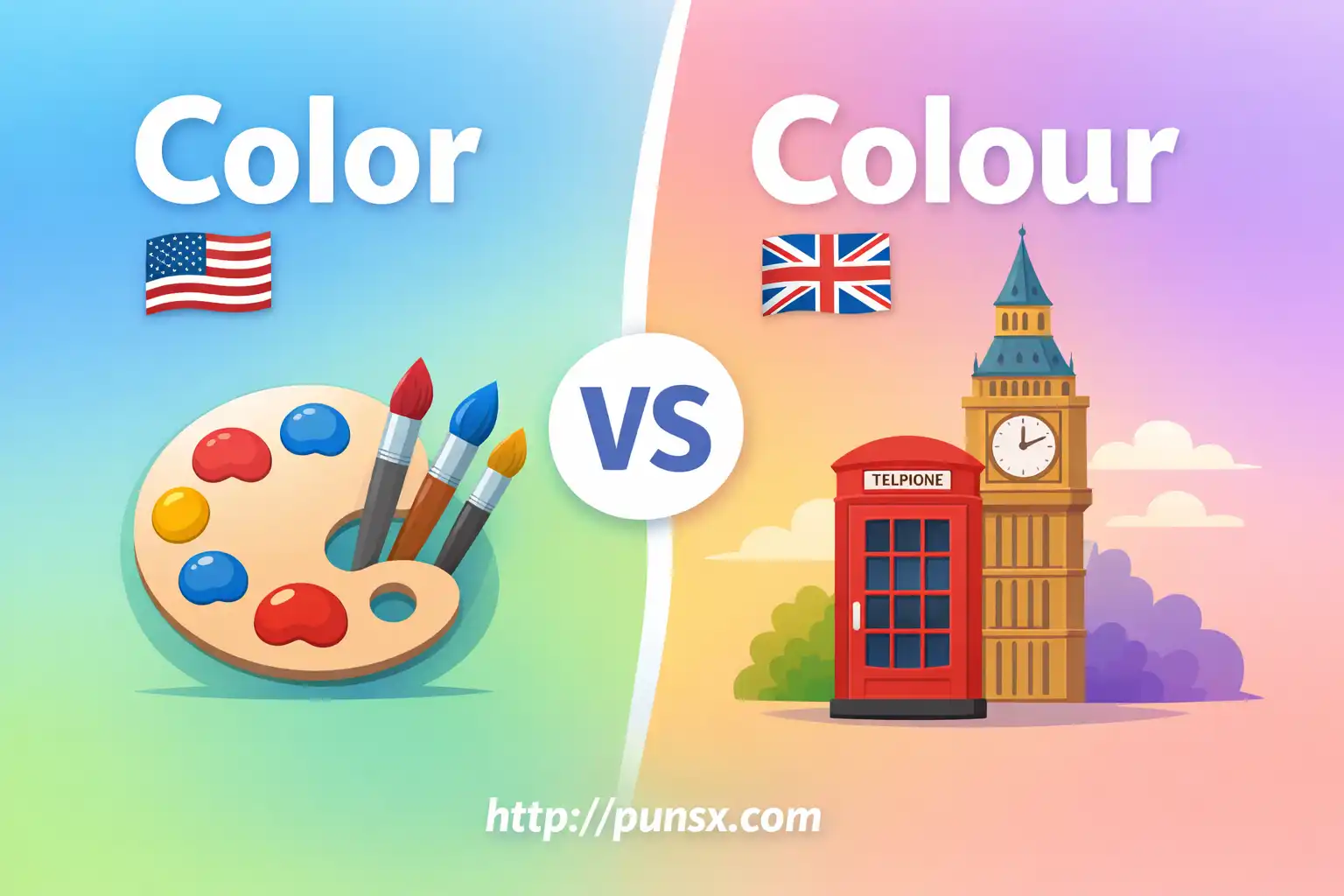
- Color and colour mean the same thing.
- Color is American English.
- Colour is British English.
Examples
- US email: “I like the blue color.”
- UK news: “Red is my favourite colour.”
Easy rule:
Use color for the US. Use colour for the UK and most other English regions.
The Origin of Color or Colour
Long ago, English spelling was not fixed. People spelled words in many ways, and no one worried much about it. The word came from Latin color, then moved through French as colour.
Later, English split into regional styles. In the 1800s, American writers wanted simpler spelling. They dropped some extra letters. As a result, colour became color in the United States.
However, the UK kept the original French-style spelling. Other countries that follow British English did the same. That is why both forms still exist today.
Now the internet mixes everything. You read US blogs and UK articles in the same hour. Because of that, the old difference feels new again, and people often stop to check which one is “right.”
British English vs American English Spelling
The difference is only spelling. The meaning never changes. Still, the spelling tells readers where the text comes from.
American English
- color
- favor
- honor
British English
- colour
- favour
- honour
In contrast, pronunciation stays the same in both forms.
| English Style | Correct Spelling |
| American | color |
| British | colour |
This pattern appears in many words, so once you learn it, things get easier.
Which Spelling Should You Use?
The best choice depends on your audience. That sounds complex, but it is not.
- US audience: Use color. Schools, offices, and media expect it.
- UK and Commonwealth: Use colour. This includes the UK, Canada, Australia, and New Zealand.
- Global or professional writing: Pick one style and stay consistent.
Consistency matters more than the spelling itself. Mixing both in one text looks careless, even though both are correct.
Common Mistakes with Color or Colour
Writers often make the same small mistakes. Here are the most common ones.
❌ Incorrect → ✅ Correct
- ❌ The color of the flag shows its colour.
✅ The color of the flag shows its meaning.
(Do not mix spellings.) - ❌ My favourite color is green.
✅ My favourite colour is green.
(Match spelling style.) - ❌ Change the colour settings (US app).
✅ Change the color settings.
These errors matter because they distract readers. They also signal the wrong regional style.
Color or Colour in Everyday Examples
You see this word everywhere, so context helps a lot.
Emails
- US: “Please change the color of the logo.”
- UK: “Please change the colour of the logo.”
News
- US news uses color in headlines.
- UK news uses colour in reviews and reports.
Social Media
- Both spellings appear.
- Influencers usually follow their country’s style.
Formal or Professional Writing
- Style guides decide the spelling.
- Editors expect consistency from start to end.
Color or Colour – Usage Patterns & Search Interest
Many users search this term because spellcheck flags it. Others see different spellings in class or at work and want a clear answer.
Students and ESL learners search it often. Writers and professionals also check it when switching audiences. Meanwhile, global brands care because one wrong letter can feel “foreign” to readers.
A real-world example is a company website. If a US company uses colour, visitors may think the site is not local. That small detail can affect trust, even though the meaning is clear.
Comparison Table: Color vs Colour
| Feature | Color | Colour |
| Meaning | Visual shade or hue | Visual shade or hue |
| Part of speech | Noun / verb | Noun / verb |
| Context of use | American English | British English |
| Formal or informal | Both | Both |
| Common mistake | Used in UK texts | Used in US texts |
| Correct example | “Pick a bright color.” | “Pick a bright colour.” |
This table shows that spelling is the only real difference.
FAQs: People Also Ask
Is color the same as colour?
Yes. They have the same meaning.
Which one is correct in formal writing?
Both are correct. Follow your audience’s style.
Can they be used interchangeably?
Not in the same document. Pick one.
Why do people confuse them?
Because English has two major spelling systems.
Can grammar tools catch this mistake?
Yes, but only if the language setting is correct.
Is there a British vs American difference?
Yes. That is the only difference.
Conclusion
Overall, color and colour are not enemies. They are simply twins from different places. One belongs to American English. The other belongs to British English and its related regions. The meaning never changes, so your message stays clear.
The real problem starts when writers mix both spellings. That mix can confuse readers and weaken trust. In school, work, and online writing, small details matter.
So remember this simple rule. If your audience is American, write color. If your audience is British or international, write colour. Finally, once you choose, stay consistent. That one habit solves the confusion every time.