Many people stop when they write woman or women. They know both words. They hear them every day. Still, the spelling feels tricky. One small letter changes the meaning, and that causes doubt. So writers pause, reread, and sometimes guess.
This confusion happens because the words look almost the same, but they sound different when spoken clearly. Also, many learners hear the words before they see them written. Because of that, the spelling does not always match what they expect. Then mistakes show up in emails, homework, posts, and even news text.
In this article, you will learn the clear difference between woman and women. You will see why people confuse them, why the mistake matters, and how to fix it fast. By the end, you will have one easy rule that works every time.
Woman or Women – Quick Answer
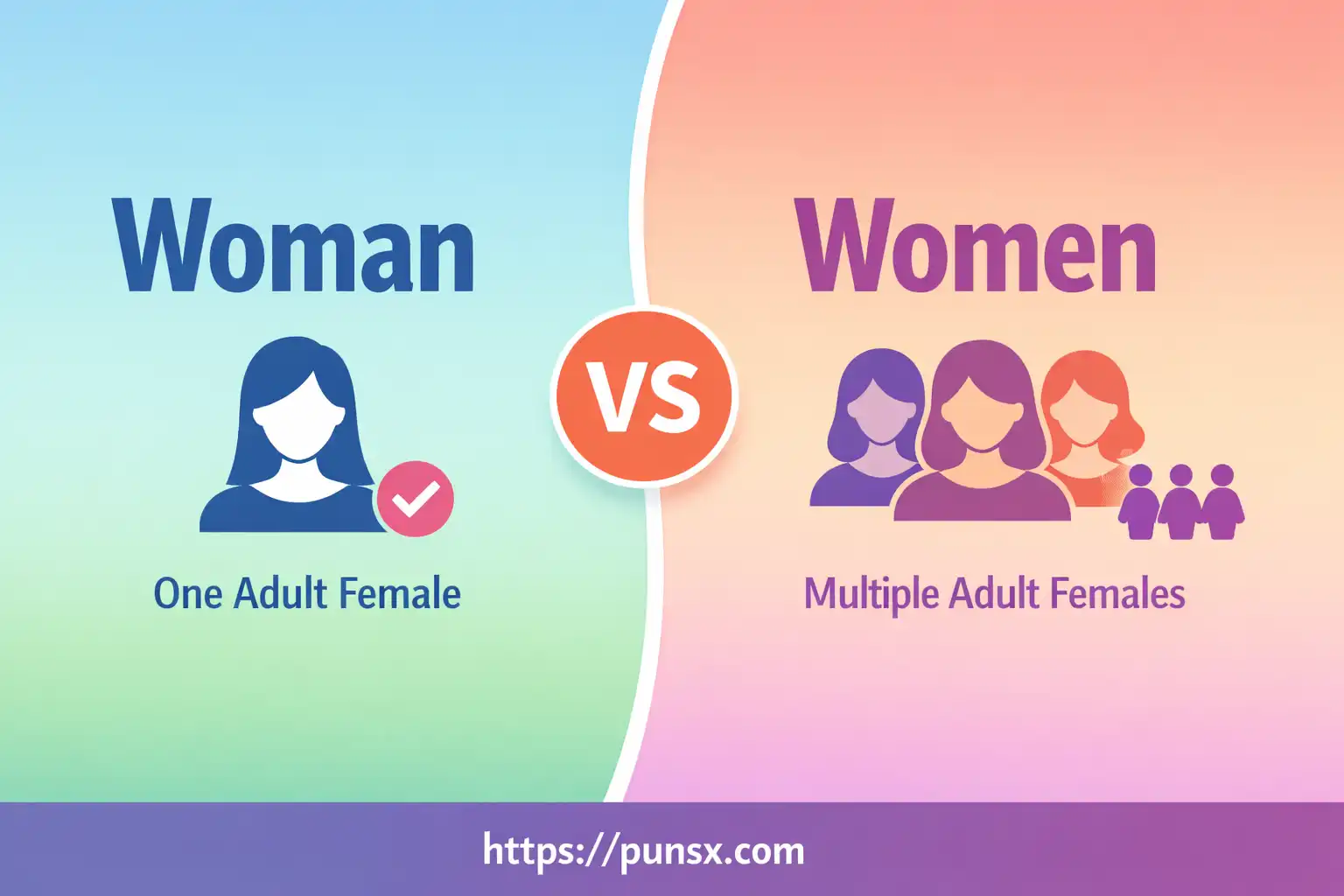
- Woman = one adult female person
- Women = more than one adult female person
Examples:
- One woman is waiting.
- Two women are talking.
Easy rule:
If you mean one, use woman.
If you mean many, use women.
The Origin of Woman or Women
The word woman comes from Old English. Long ago, it meant “female human.” Over time, the spelling changed, but the core meaning stayed the same. The plural form later became women, not womans. That change followed older sound patterns in English.
Now, this history matters because English keeps many old forms. As a result, woman and women look very similar on the page. Only one vowel changes. Still, that small change signals a big meaning shift.
Today, the confusion stays alive because English spelling is not always logical. Many learners expect the plural to look simpler. Writers often type fast, so they miss the vowel change. Editors usually see this mistake in early drafts, especially when the sentence talks about groups.
British English vs American English Spelling
Here is some good news. There is no spelling difference between British and American English for these words.
- British English: woman / women
- American English: woman / women
In contrast to words like colour and color, these forms stay the same everywhere. So you do not need to adjust spelling for location.
| Form | UK English | US English |
| Singular | woman | woman |
| Plural | women | women |
Because of this, the real challenge is not region. It is usage.
Which Spelling Should You Use?
You should choose based on number, not audience.
- US readers: use woman for one, women for many
- UK readers: use woman for one, women for many
- Global or professional writing: the same rule applies
So the choice never changes. The context tells you what to use. If the sentence talks about one person, pick the singular. If it talks about a group, pick the plural.
When writers slow down and check the noun, the mistake disappears.
Common Mistakes with Woman or Women
Writers often mix these words because they type what they hear. Still, the ear can trick you.
❌ Incorrect: She is a strong women.
✅ Correct: She is a strong woman.
❌ Incorrect: One women spoke at the event.
✅ Correct: One woman spoke at the event.
❌ Incorrect: The woman are ready.
✅ Correct: The women are ready.
Each error breaks subject and number agreement. That makes the sentence feel wrong to readers, even if they cannot explain why.
Woman or Women in Everyday Examples
Here is how correct usage looks in daily writing.
Emails
- The woman you called will reply soon.
- The women in our team agree.
News
- A local woman won the award.
- Women across the city joined the march.
Social Media
- This woman inspires me.
- These women are amazing.
Formal or Professional Writing
- The study focuses on one woman.
- The report includes interviews with women.
In every case, the number controls the word choice.
Woman or Women – Usage Patterns & Search Interest
People search for woman or women because they want quick clarity. Students, ESL learners, writers, and professionals all face this issue. It often appears during editing or exam writing.
Search interest stays steady because English learners keep growing worldwide. Also, short words with vowel changes cause stress. Grammar tools may flag the error, but they do not always explain it well.
One real-world problem happens in headlines. If a headline says “Woman protest policy,” readers feel confused. The message feels incomplete. One wrong letter changes the meaning and weakens trust.
Comparison Table: Woman vs Women
| Feature | Woman | Women |
| Meaning | One adult female | More than one adult female |
| Part of speech | Noun | Noun |
| Context of use | Singular subject or object | Plural subject or object |
| Formal vs informal | Used in all tones | Used in all tones |
| Common mistake | Used for groups | Used for one person |
| Correct example | The woman speaks. | The women speak. |
This table shows the difference at a glance.
Semantic FAQs (People Also Ask)
Is woman the same as women?
No. Woman is singular. Women is plural.
Which one is correct in formal writing?
Both are correct when used with the right number.
Can they be used interchangeably?
No. Each word has a fixed meaning.
Why do people confuse them?
They look similar and change only one vowel.
Can grammar tools catch this mistake?
Sometimes, but not always.
Is there a British vs American difference?
No. The spelling is the same.
Conclusion
Overall, woman and women are simple words with a tricky twist. The spelling difference is small, but the meaning difference is big. Many people confuse them because English keeps old forms, and fast typing hides small errors.
In short, the problem is not knowledge. It is attention. Once you link the word to the number, the choice becomes clear. Use woman for one person. Use women for more than one.
Finally, remember this easy rule:
One = woman. Many = women.
If you check that one detail, you will always be right.

I’m Pablo Neruda, an author at PunsX.com, and I’m an expert in creating clever and playful puns.
I love turning simple words into fun, shareable humor that makes people smile.