There is a quiet confidence that comes with a well-chosen bed frame. It sets the tone for the entire room — not just aesthetically, but structurally. A wood queen bed frame sits at the intersection of form and function, offering the warmth of natural material, the durability of solid construction, and a size that suits most adult bedrooms without overwhelming the space. Whether you are furnishing a primary suite, a guest room, or a newly rented apartment, the queen size is the most versatile choice on the market, and wood as a material brings a timeless quality that trends rarely erode.
Yet many shoppers find themselves paralyzed by choice. Platform or storage? Upholstered headboard or bare wood? Modern silhouette or mid-century profile? This guide walks you through every dimension of the decision — from material considerations to style pairings, from assembly realities to long-term care — so you can invest confidently in a piece that will anchor your bedroom for years to come.
What Makes Wood the Right Material for a Queen Bed Frame
Wood has been the foundation of bedroom furniture for centuries, and that longevity is not accidental. As a structural material, solid wood — particularly hardwoods like birch, oak, and walnut — offers a load-bearing capacity that MDF, particleboard, and metal frames rarely match over extended use. A queen mattress can weigh anywhere from 60 to over 150 pounds depending on type, and that weight compounds when you factor in two sleeping adults and the dynamic stress of nightly movement. A solid wood frame distributes that load through its grain structure rather than relying on fasteners and adhesives alone.
Beyond raw strength, wood provides acoustic benefits that go unnoticed until you experience their absence. Metal frames flex and resonate, producing the familiar creak that interrupts sleep. Wood absorbs vibration rather than amplifying it, which is why a well-constructed birchwood frame tends to stay quiet even as it ages. This quality matters most in lighter sleepers and households where one partner wakes earlier than the other.
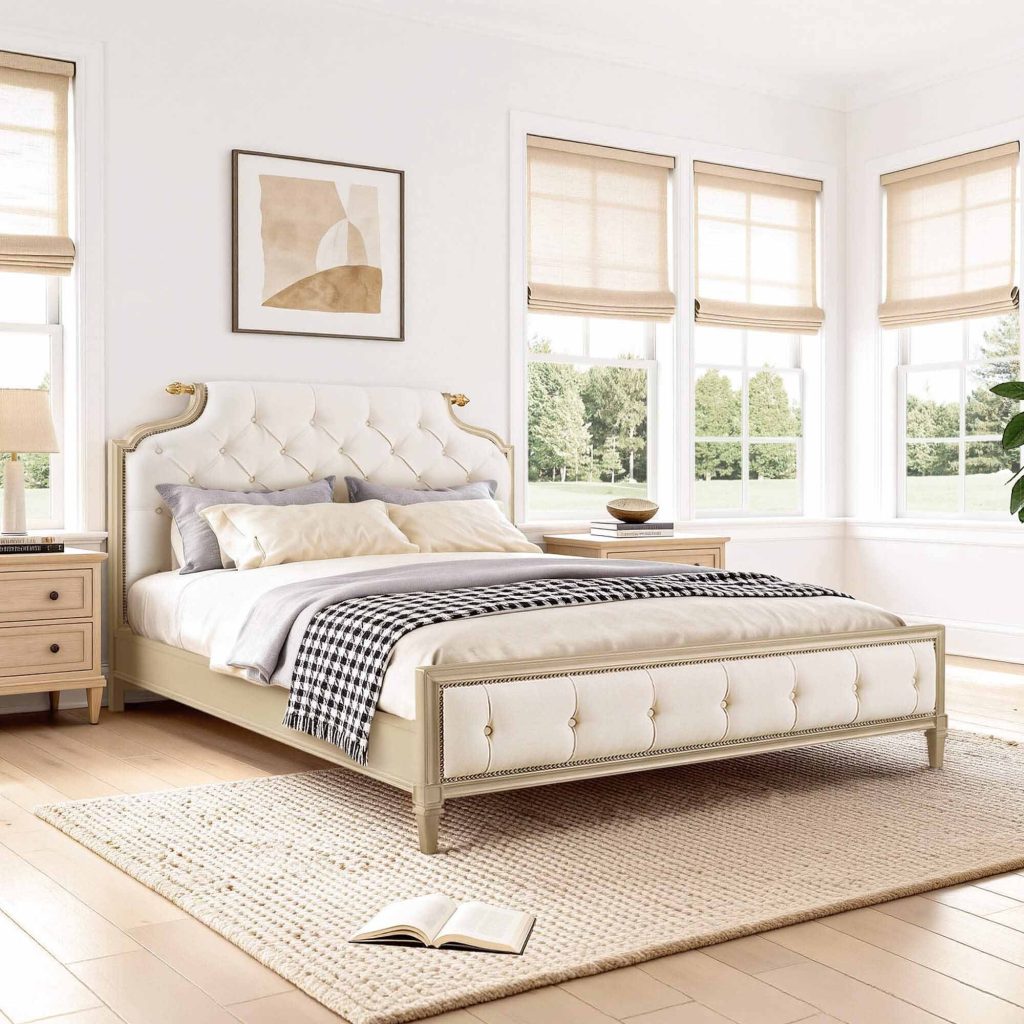
Wood also ages with character rather than degrading visibly. A scratch on a metal frame looks like damage. The same wear on a walnut or birch surface often reads as patina — a record of use that adds rather than subtracts from the piece’s appeal. This is a practical distinction for anyone who moves frequently or plans to resell or repurpose furniture over time.
Solid Wood vs. Engineered Wood: Understanding the Difference
Not every bed frame labeled “wood” is made from the same material. Solid wood refers to lumber cut directly from a single tree, retaining the original grain and density. Engineered wood — including plywood, MDF, and particleboard — is manufactured by bonding wood fibers, chips, or veneers under heat and pressure. Both have legitimate uses in furniture construction, but they behave differently under stress and over time.
Solid wood expands and contracts slightly with seasonal humidity changes, which is why quality manufacturers cut and join pieces to accommodate this movement. Engineered wood is more dimensionally stable in controlled environments but tends to swell and delaminate when exposed to moisture — a relevant concern for ground-floor bedrooms or homes without climate control. For the structural components of a bed frame — legs, rails, and slat supports — solid wood is the more reliable long-term choice. Engineered wood can reasonably appear in decorative panel elements where structural load is minimal.
When evaluating a wood queen bed frame, look at the joinery as much as the surface finish. Mortise-and-tenon joints and dowel connections distribute stress across a wide surface area. Butt joints held only by screws are the weakest configuration and the first point of failure in budget frames. A frame that specifies its joint type in product documentation is typically one built by manufacturers who understand why it matters.
Choosing the Right Style for Your Bedroom
A queen bed frame occupies the largest footprint of any single piece in most bedrooms. Its visual weight shapes the room’s personality, so style alignment between the frame and its surroundings is worth deliberate thought rather than afterthought.

Contemporary and platform-style frames tend toward low profiles, clean horizontal lines, and minimal ornamentation. They pair naturally with low-profile nightstands, simple pendant lighting, and neutral textile palettes. This style also works well in rooms with lower ceilings, where a tall headboard can feel imposing rather than grand. A platform frame in natural birch or light walnut keeps the space feeling open even in a smaller room.
Mid-century designs reintroduce tapered legs, gentle curves, and the warm amber tones of walnut and teak-adjacent finishes. They carry a nostalgic quality without being period-specific, which makes them adaptable to modern interiors that want visual interest without maximizing visual complexity. Chitaliving’s mid-century offerings pair solid birchwood construction with upholstered headboard panels, bridging the gap between warmth and comfort in a single frame.
Headboard Options and Their Practical Impact
The headboard is the visual focal point of a bed frame, but it also has practical consequences for how the bed is used. A bare wood headboard offers clean lines and easy maintenance but provides no softness for sitting up in bed to read or watch television. An upholstered headboard — whether in boucle, chenille, performance fabric, or leather — adds acoustic softness to the room and physical cushioning for anyone who spends time in bed beyond sleeping.
Channel and tufted upholstery styles introduce texture and visual depth that can anchor a room even without additional wall decor. Wingback designs extend the upholstery along the sides of the headboard, creating a more enclosed, cocoon-like feel that some sleepers find calming. The choice ultimately depends on how the bedroom functions: a room used primarily for sleeping benefits from simplicity, while a room that doubles as a reading or working space rewards the added comfort of upholstery.
When selecting headboard height, consider the wall space above the bed. A headboard that extends to within a foot of ceiling height creates a dramatic, built-in look. A lower profile leaves room for art or a floating shelf. Neither is objectively better — the right choice depends on what else is happening on that wall and how tall the room’s occupants prefer their reading surface.
Storage Integration in Wood Queen Bed Frames
One of the more practical innovations in modern bed frame design is the integration of storage directly into the structure. For urban dwellers, apartment renters, and anyone managing a smaller bedroom, under-bed storage can meaningfully reduce the need for additional furniture — fewer dressers, fewer storage ottomans, less visual clutter competing with the room’s primary focal point.
Storage beds generally come in two configurations: drawer-based and ottoman-style. Drawer systems — typically two to four drawers along the sides of the frame — offer quick access to bedding, clothing, or seasonal items without lifting the mattress. They work best when the bed has a fixed position against a wall on one side, since the opposite-side drawers need clearance to open fully. Ottoman-style storage uses a hydraulic lift mechanism to raise the entire mattress platform, revealing a large, undivided storage cavity beneath. This configuration is better for bulkier items like luggage, extra pillows, or off-season comforters, but requires clearing space around the bed to lift the platform safely.
The structural demands of storage integration are worth considering. Drawer systems add weight to the frame and require robust rail construction to prevent sagging over time. Look for frames that specify the drawer weight capacity, not just the mattress weight limit. A well-engineered storage bed in solid birchwood will handle daily drawer use for years; a cheaper alternative with thin plywood drawer boxes and plastic runners will not.
Assembly, Delivery, and Setup Realities
A queen bed frame is not a small purchase in any dimension — literally or financially. Understanding what the buying process actually involves from the moment of order to the first night of use prevents the frustration that catches many furniture buyers off guard.
Most online furniture retailers ship queen bed frames in two to four boxes, with total package weights ranging from 80 to over 200 pounds depending on construction. Standard delivery typically means the boxes are left at the door or in a building lobby. White Glove delivery — available from retailers like Chitaliving on select models — includes in-home delivery, room placement, and assembly, which is a meaningful service distinction for anyone buying alone, living in an upper-floor apartment, or simply preferring not to spend an afternoon with an Allen wrench.
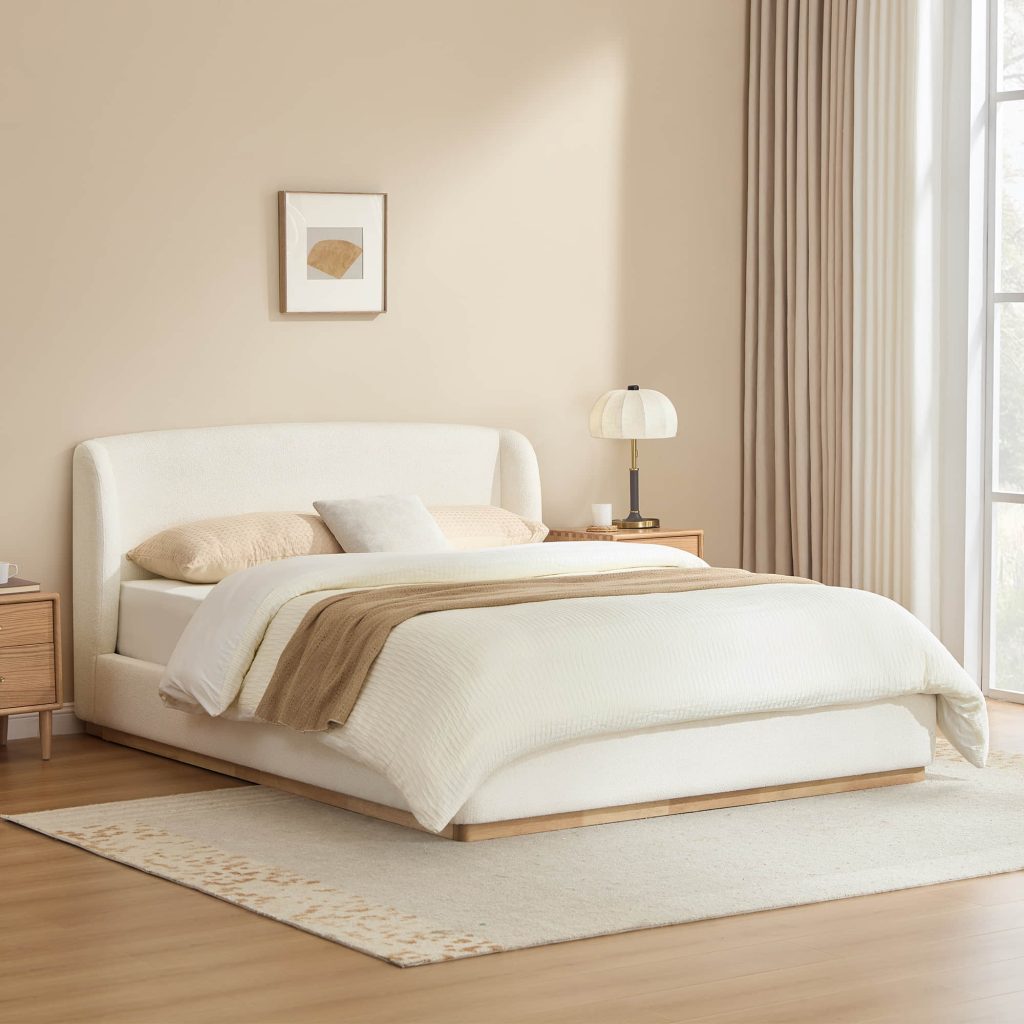
Assembly complexity varies significantly by frame design. Platform beds with slat systems are generally the most straightforward: a perimeter frame snaps or bolts together, slats drop into place, and the headboard attaches with a few bolts. Storage beds with hydraulic lifts or drawer systems add complexity, particularly in aligning the drawer slides and ensuring the lift mechanism is balanced before loading the mattress. Most manufacturers provide video instructions in addition to paper diagrams, which are worth watching before opening any packaging.
What to Check Before the First Night
Once assembled, a few checks before loading the mattress will save problems later. First, verify that all bolts are fully tightened — not just hand-tight, but torqued against the wood. Wood compresses slightly under initial load, and fasteners that feel secure during assembly can loosen after the first few nights of use. A single pass with the provided tool after the first week of use prevents the gradual loosening that leads to squeaking. Second, check that slats are evenly spaced and that any center support legs are making full contact with the floor. A slat that bows slightly under mattress weight is normal; one that deflects more than an inch under moderate hand pressure should be replaced before it becomes a failure point.
Long-Term Care for a Wood Queen Bed Frame
Solid wood furniture rewards basic maintenance with decades of reliable performance. The inputs are minimal: consistent humidity, occasional cleaning, and prompt attention to any mechanical loosening.
Wood is hygroscopic — it absorbs and releases moisture from the surrounding air. In very dry environments (below 30% relative humidity), wood can crack along the grain. In very humid environments (above 60%), it can swell enough to stress joints and finishes. A bedroom maintained between 40% and 55% relative humidity keeps wood stable year-round. If your home runs dry in winter, a room humidifier near the bed is a practical and inexpensive preventive measure.
For cleaning, a lightly dampened microfiber cloth handles dust and surface grime without introducing enough moisture to damage the finish. Avoid spray cleaners, silicone-based polishes, and anything containing ammonia or bleach, all of which degrade wood finishes over time. For natural oil or wax finishes — common on exposed wood headboards and legs — a periodic application of the same oil or wax used originally will refresh the surface and maintain its protective layer. Lacquered and polyurethane finishes need no additional product; they simply need to be kept clean.
If a structural connection loosens over time, address it before it worsens. A loose mortise-and-tenon joint can be re-glued with wood glue and clamped overnight. A stripped screw hole can be packed with a wooden toothpick and wood glue, allowed to cure, and re-driven once the filler hardens. Neither repair requires professional skill, but both require acting before the movement becomes wear — because wear in wood joinery is cumulative and accelerates once started.
The Right Frame, Built to Last
A wood queen bed frame is one of the more consequential furniture purchases most people make — not because of its cost alone, but because of how centrally it figures in daily life. The quality of sleep, the visual tone of the room, the ease of morning routine: all of these are shaped by whether the frame was chosen with care or convenience. Solid wood construction, thoughtful joinery, and a style that fits both the room and the person using it are the parameters that separate a frame you replace in five years from one you refinish in twenty.
Take the time to understand what you are buying before committing. Read the material specifications, not just the marketing copy. Consider the delivery and assembly requirements in the context of your actual living situation. And prioritize the dimensions that matter most to you — whether that is storage capacity, headboard comfort, visual presence, or acoustic performance at night. The best bed frame is the one that disappears into the background of a room that feels exactly right.