Many people stop when they write the phrase “wether or not.”
It looks right, but something feels off. Spellcheck may not help. Friends may disagree. So the doubt stays.
This confusion happens because English has words that sound the same but mean very different things. Wether and whether are one of those pairs. They sound alike, so mistakes feel easy and harmless. But in real writing, the error matters. It can change meaning, tone, and clarity.
In this guide, you will learn what “wether or not” really means, why it is wrong in most cases, and what you should use instead. We will go step by step, using simple words, clear stories, and real examples. By the end, you will know the rule, remember it easily, and never pause again.
Wether or Not – Quick Answer
“Wether or not” is usually wrong.
The correct phrase is “whether or not.”
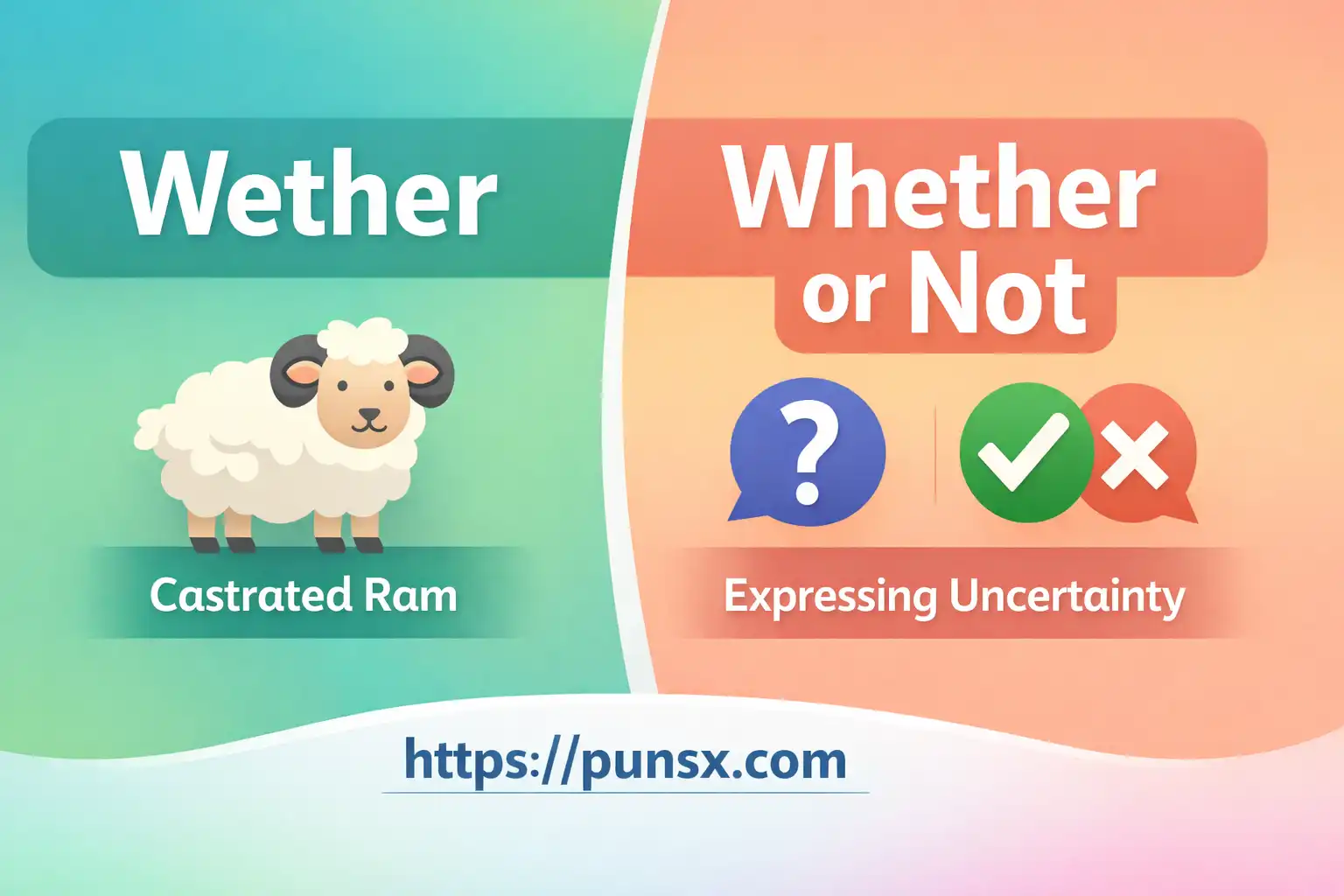
- Whether = shows a choice or condition
- Wether = a male sheep
Example:
- ❌ I don’t know wether or not she will come.
- ✅ I don’t know whether or not she will come.
Easy rule:
If you mean choice or doubt, always use whether.
The Origin of Wether or Not
The confusion starts with history.
The word whether comes from Old English. Long ago, it meant which of two. Over time, it grew into a word we use for choices, doubts, and conditions. For example, whether to stay or go.
The word wether, however, comes from farming language. It means a castrated male sheep. That meaning never changed.
So why do people mix them up now?
Because English spelling does not always match sound. Both words sound the same when spoken. Also, many people learn English by listening first, not reading. As a result, the wrong spelling slips in and spreads online.
British English vs American English Spelling
This mistake is not about British vs American English.
Both British English and American English follow the same rule:
- Whether is the correct word for choices or conditions
- Wether only means a type of sheep
There is no regional spelling difference here. In contrast to words like color and colour, this pair does not change by country.
| Usage | British English | American English |
| Choice or doubt | whether | whether |
| Male sheep | wether | wether |
So no matter where you write, the rule stays the same.
Which Spelling Should You Use?
For US writing, always use whether when talking about choices or outcomes.
For UK and Commonwealth writing, the same rule applies. Editors expect whether, not wether, in normal sentences.
For global or professional writing, this matters even more. A single spelling error can make writing look rushed or unclear. Also, search engines and grammar tools may flag the mistake.
So the answer is simple:
If you are not talking about sheep, use whether.
Common Mistakes with Wether or Not
Writers often make the same errors again and again. Here are the most common ones.
❌ Incorrect: She asked wether or not the meeting was canceled.
✅ Correct: She asked whether or not the meeting was canceled.
❌ Incorrect: I’m not sure wether to call him.
✅ Correct: I’m not sure whether to call him.
❌ Incorrect: Let me know wether you agree or not.
✅ Correct: Let me know whether you agree or not.
Why this matters:
Readers may pause, feel confused, or lose trust. Even small errors can break flow and confidence.
Wether or Not in Everyday Examples
Let’s see how whether or not works in real life.
Emails
- Please confirm whether or not you can attend the meeting.
News
- Officials are deciding whether or not to close the road.
Social media
- Not sure whether or not this movie is worth watching.
Formal or professional writing
- The study examines whether or not the policy had an effect.
In all cases, the phrase introduces a decision, doubt, or condition. That is the key.
Wether or Not – Usage Patterns & Search Interest
People search for “wether or not” because they feel unsure. They may have seen both forms online. They may also rely on sound instead of spelling.
Students, ESL learners, writers, and professionals all make this mistake. Editors usually see it in fast writing, like emails or posts.
One real-world problem appears in school or work writing. A simple spelling error can lower grades or reduce credibility. That is why this small detail matters more than it seems.
Comparison Table: Wether vs Whether
| Feature | Wether | Whether |
| Meaning | A male sheep | A choice, doubt, or condition |
| Part of speech | Noun | Conjunction |
| Context of use | Farming, animals | Questions, decisions |
| Formal or informal | Rare, specific | Common, all writing |
| Common mistake | Used instead of whether | Rarely confused |
| Correct example | The farmer sold a wether. | I wonder whether or not it will rain. |
This table removes the confusion fast.
Semantic FAQs (People Also Ask)
Is “wether or not” ever correct?
Only if you are talking about sheep. Otherwise, no.
Is “whether or not” formal?
Yes, but it also works in casual writing.
Can “whether” be used without “or not”?
Yes. Whether alone is often enough.
Why do people confuse wether and whether?
They sound the same when spoken.
Can grammar tools catch this mistake?
Sometimes, but not always.
Is there a British vs American difference?
No. Both use the same spelling.
Conclusion
Overall, the phrase “wether or not” causes confusion because English words can sound alike but mean very different things. The mistake feels small, but it shows up clearly in writing.
In short, wether is a sheep. Whether is a choice. Mixing them up can distract readers and weaken your message.
The one mistake to always avoid is spelling whether as wether when you talk about decisions, doubts, or outcomes.
Finally, remember this easy rule:
If “or not” follows, the word is always “whether.”
Once you know that, the problem disappears for good.

I’m Beau Taplin, the author behind PunsX.com, and I’m a passionate expert in clever, witty wordplay.
I create fun, shareable puns that turn simple ideas into smiles.