Every home has one piece of furniture that does more work than it gets credit for. It quietly hosts breakfast, homework, tax paperwork, birthday cakes, and long conversations that stretch past midnight. For a lot of households, that piece is the dining table. And once you spend real time with one, it becomes clear that a round dining table has a way of holding a room together that no other shape quite manages. Corners tend to divide space. A circle draws it inward. Chairs slide in from any angle, sight lines stay open, and conversation flows without anyone getting stuck at the far end. A round dining table is not a trend or a fleeting styling moment. It is a quiet, sensible choice that has been part of family life for centuries, from farmhouse kitchens to modern lofts. This guide walks through why the shape works, what to look for when you shop, how to size one for your space, and how to style around it so it feels like the anchor of the room rather than another item on a floor plan.
Why the Shape Just Works
Round dining tables have a soft, generous logic to them. Because there are no corners, no seat feels like a corner seat. Everyone is more or less the same distance from the center of the table, which changes the way a meal feels. You are not passing the salt down a long line; you are handing it across a shared circle. Conversation branches instead of running end to end, and quieter guests are less likely to be trapped at one end of a rectangular slab. The absence of sharp edges is a practical benefit too. In smaller apartments or homes with young kids, a rounded silhouette forgives clumsy hips, elbows, and shins. You can slip past it without catching a corner, and toddlers running laps around the kitchen tend to bounce off, rather than crash into, its perimeter. Even the visual weight of a round shape is easier to live with. Circles read as calm. They tend not to compete with cabinetry, rugs, or windows. Whether the room is contemporary, farmhouse, mid-century, or a comfortable blend of several styles, the shape settles in without demanding to be the loudest thing in view. That easy adaptability is a big part of why the silhouette keeps finding its way into new homes year after year.
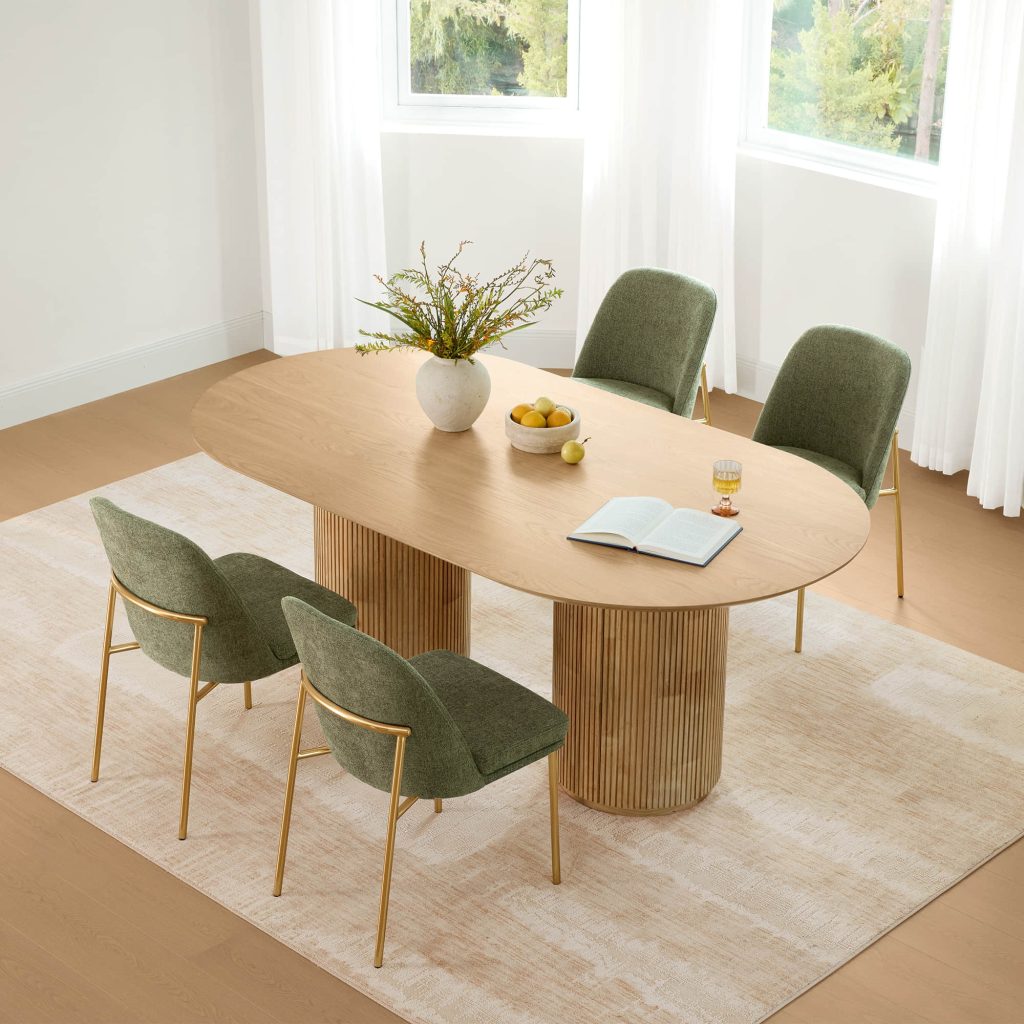
If you have been browsing options and feeling unsure where to start, a well-made round dining table can be a useful reference point for the whole project. The proportions are usually easier to visualize than a long rectangle, the base is typically a single pedestal or a small footprint, and the overall look tends to work in more rooms than not. Once you have that anchor in mind, the rest of the room begins to fall into place around it, from chair choice to lighting to the rug underneath.
Materials, Silhouettes, and Everyday Character
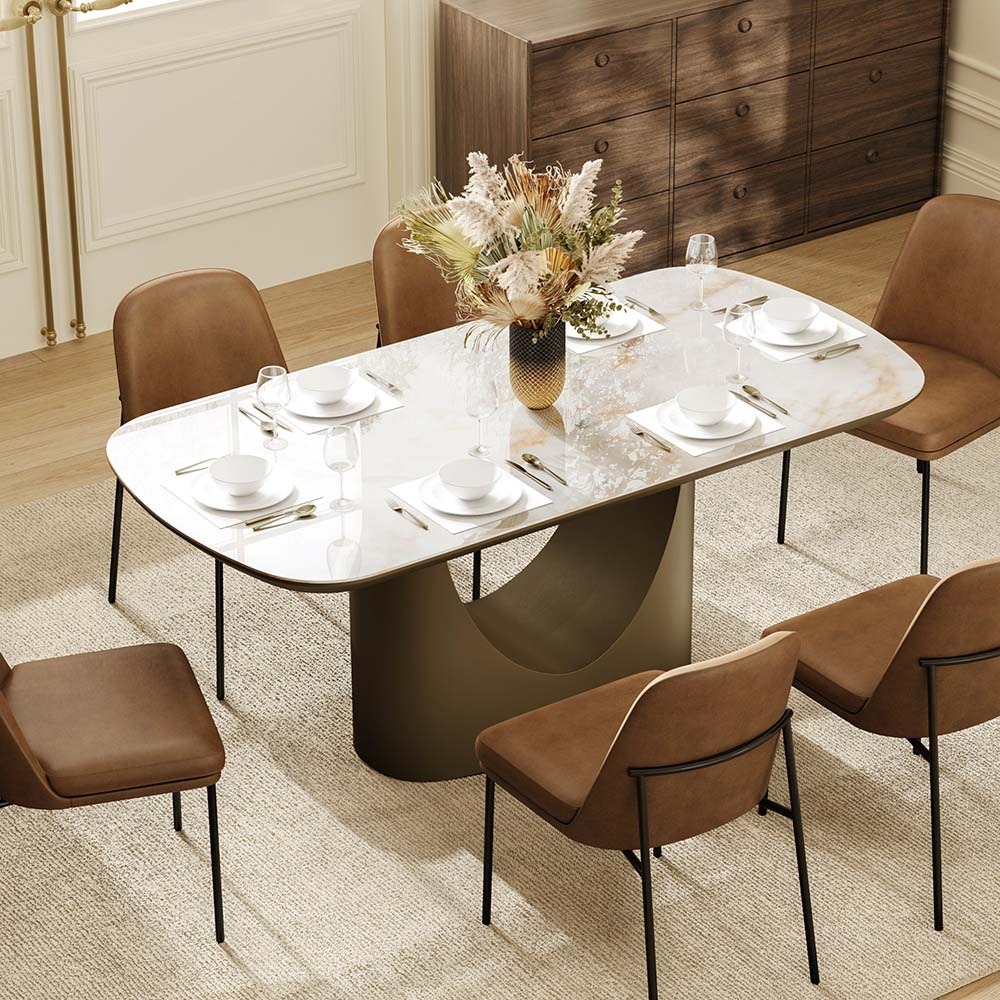
Beyond shape, a round table takes on personality through the materials it is made of. Solid wood tops bring warmth and grain that shifts with light throughout the day. Oak feels sturdy and traditional; walnut leans richer and slightly more formal; ash and birch skew brighter and more contemporary. Fluted or ribbed edges add rhythm to an otherwise plain surface and catch shadow in a way that gives the piece movement even when it is standing still. Stone and stone-look tops, on the other hand, give a room a cooler, more architectural feel. Marble, travertine, and sintered stone bring pattern and depth without extra decor, which is genuinely useful in a small dining space where less tends to be more. Bases are their own quiet decision. A single pedestal keeps the floor uncluttered, makes it easy to add or remove chairs, and reads as a little more classic. Splayed legs or a tulip-style base add sculpture and a touch of retro character. A drum base grounds the table visually and works well when the top has strong pattern. None of these choices are only about looks. Wood tops feel warm in winter and can be sanded and refinished; stone tops resist heat and moisture and forgive spills; a slim pedestal is easier to sweep under and easier to move. Thinking through daily habits before finalizing style is a shortcut to a table you will still like five years from now, not just on the day it arrives.
Getting the Size and Placement Right
Sizing is where a lot of dining tables go wrong. Too small, and the room feels underfurnished; too large, and chairs get pinned against walls. With a round shape, the math is a little more forgiving than with a rectangle, but the fundamentals still apply. Leave enough space around the table for chairs to slide back and for people to walk past without turning sideways. If your dining area sits inside a shared living or kitchen space, aim for a table diameter that leaves a clear walkway on at least two sides. A pedestal base helps here, because you can slip chairs closer together when you have unexpected guests without legs getting in the way. Ceiling height and window placement matter more than most people think. A low-slung, wide-footprint table in a small room with tall ceilings will feel visually short. A slim silhouette under a generous pendant light, on the other hand, can make a modest room feel intentional and put-together. If you are working with an open plan, think about the table as a hinge between zones. It should relate to the kitchen island in scale, and to the sofa in tone. When those relationships line up, the room feels cohesive, even before you add rugs or art. Take rough measurements before you shop, and mark the diameter on the floor with painter’s tape and a piece of string. It is a low-effort trick that saves a lot of returns.
Styling Around It Without Overdoing It
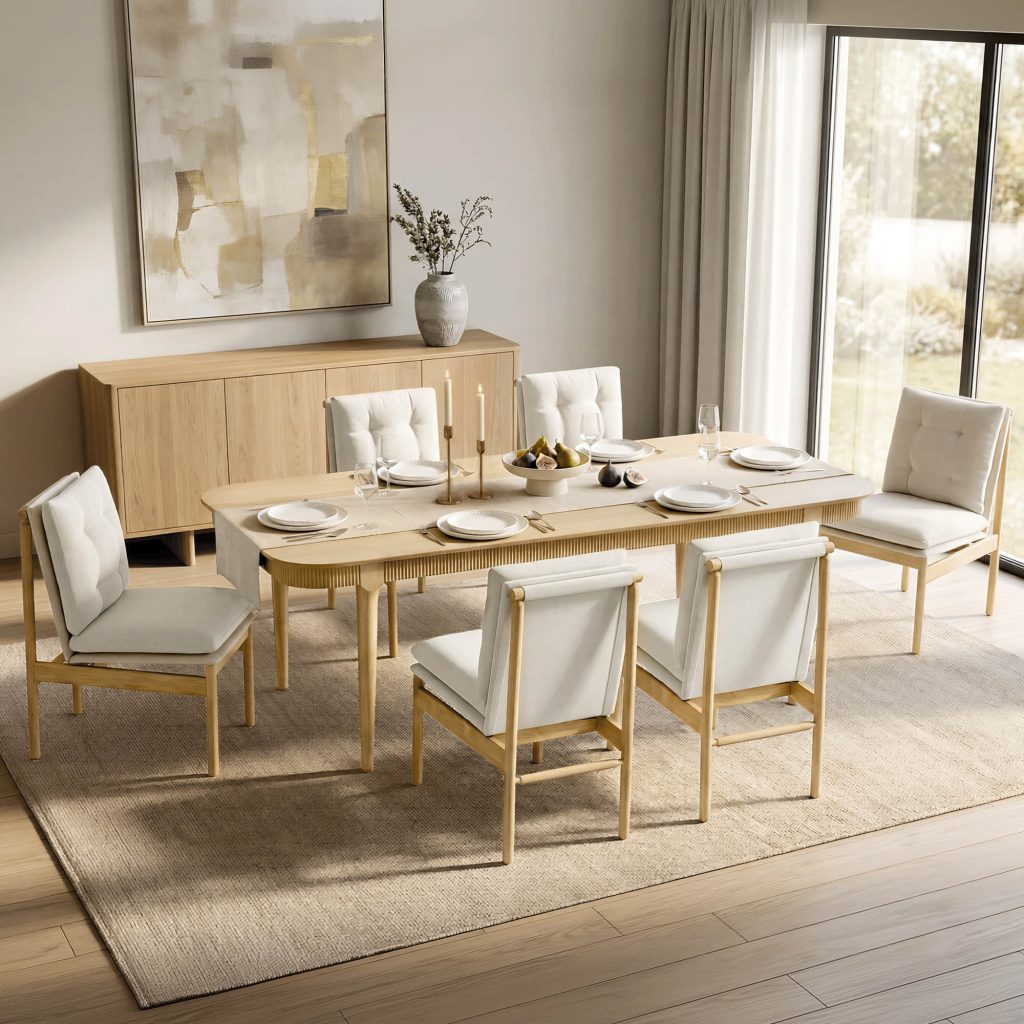
Once the table is in place, the rest of the room can stay simple. Round tables do not need a lot of decoration on top; a low centerpiece, a small stack of books, or a shallow bowl is usually enough. Tall arrangements block sight lines and undo the shape’s best feature. For chairs, mix and match with intention. Four matching chairs read as classic and quietly formal. Two upholstered heads with two woven or wood sides give the setup a subtle rhythm without looking chaotic. Bench seating is generally best avoided on a round table; it fights the geometry and cuts the circle into an awkward wedge. Lighting is the other decision that carries real weight. A single pendant or small chandelier centered above the table pulls the room together and turns the table into a soft focal point at night. Aim the fixture roughly the same diameter as, or slightly narrower than, the table itself, and hang it high enough that it does not cut across faces during a meal. A rug underneath is optional. If you use one, choose a size that lets the chairs stay on the rug even when pulled out, so nothing catches when someone stands up. Brands that focus on quiet, everyday design, such as CHITA LIVING, tend to keep these proportions in mind from the start, which makes it easier to build a room where the table feels like it belongs rather than an afterthought squeezed into whatever space was left.
A Small Choice That Shapes Everyday Life
The right dining table is easy to overlook until you sit at one that truly works. A round shape carries a quiet advantage in most homes: it fits into more layouts, it invites conversation, it forgives tight corners, and it manages to look at home in nearly every style of room. It does not need to be the flashiest piece of furniture in the house. It just needs to be well made, well proportioned, and well placed. Take the time to think through material, base, and diameter before committing. Sit at a similar table in a showroom or a friend’s home if you can, and pay attention to how the chairs tuck in, how the surface feels under your hands, and how the whole thing carries a busy afternoon. When those details line up with the way your household actually eats, works, and gathers, the table stops being just furniture. It becomes the quiet center of the room, the place everyone drifts back to, and one of the most useful pieces you will ever own.