Have you ever been confused about whether to use the word girlie or girly? You’re not alone. Many people mistakenly use these words interchangeably, unaware that there are subtle differences in meaning, usage, and context. This article aims to clear up any confusion and help you understand when to use each one in the right way.
At first glance, girlie and girly seem almost identical. Both describe something that’s typically associated with women or femininity. However, they’re not quite the same. Understanding their differences can help improve your writing, whether you’re composing emails, posting on social media, or writing professionally.
In this article, we’ll explore the origin of these words, when to use each one, and the common mistakes people make. By the end, you’ll be able to confidently use girlie and girly in their correct contexts. Let’s dive in!
Girlie – Quick Answer
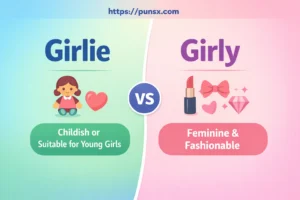
- Girlie: Old-fashioned, informal, often used to describe something that is too childish or frivolous for grown women.
- Girly: More modern, widely accepted, and typically used for things related to femininity, fashion, or style.
Decision Rule: Use girly for most everyday contexts, especially when talking about feminine style, fashion, or behavior. Use girlie if you want to describe something that may seem more childlike or stereotypically “too feminine.”
The Origin of Girlie vs. Girly
Understanding the origin of both words will help explain why people use them differently.
- Girlie: This term was widely used in the early to mid-20th century. It was originally used to describe something that was characteristic of a girl, but over time, it gained a more juvenile and informal tone. It sometimes refers to something that is overly cute or silly, often in a way that may not be considered “grown-up.” In the past, girlie was used more frequently, especially in casual contexts, but its use has decreased in modern English.
- Girly: The word girly is more modern and is widely accepted in both British and American English today. It is often used to describe anything that is typically feminine, from fashion and decor to behavior and interests. The word carries less of the juvenile, outdated tone of girlie and is more flexible in terms of how and where it’s used.
British English vs American English Spelling
Both girlie and girly follow similar spelling conventions in both British and American English. However, girly is the more common spelling in both versions of English. The spelling girlie is more likely to be used in informal, older contexts, but girly has become the standard in modern writing and conversation.
- British English: Both words are understood, but girly is favored in contemporary usage.
- American English: Girly is much more common than girlie, reflecting the trend toward more modern language.
Here’s a quick comparison:
| Spelling | Usage | Context | Example |
| Girlie | Informal, old-fashioned | Overly childlike, silly | She likes the girlie games but feels a bit childish. |
| Girly | Modern, widely accepted | Feminine, stylish, or fashionable | Her room is decorated with girly pink colors. |
Which Spelling Should You Use?
- For Most Situations: If you’re writing for a modern audience, use girly.
- For More Childlike or Vintage Descriptions: You can use girlie, but it’s best to reserve it for nostalgic or old-fashioned contexts.
- Professional Writing: Stick to girly, as it’s more acceptable in formal writing and everyday usage.
Common Mistakes with Girlie vs. Girly
Even seasoned writers sometimes mix up girlie and girly. Here are a few common mistakes you might encounter:
- Mistake 1: Using girlie when describing modern, feminine things like fashion or interests.
- ❌ Incorrect: “She’s into all the girlie trends in fashion.”
- ✅ Correct: “She’s into all the girly trends in fashion.”
- Mistake 2: Using girly in contexts where it seems juvenile or immature.
- ❌ Incorrect: “The girlie games they played were really fun.”
- ✅ Correct: “The girly games they played were really fun.”
- Mistake 3: Confusing the tone in professional or formal writing.
- ❌ Incorrect: “Her girlie dress was perfect for the office event.”
- ✅ Correct: “Her girly dress was perfect for the office event.”
Girlie vs. Girly in Everyday Examples
Here are some everyday examples to show you when to use girlie and when to choose girly:
- Emails:
- Girly: “The pink dress is so girly, I’m sure she’ll love it.”
- Girlie: “She was wearing a girlie outfit, which made her seem younger.”
- News:
- Girly: “The fashion show featured lots of girly outfits in bright colors.”
- Girlie: “The girlie theme of the party felt outdated.”
- Social Media:
- Girly: “Her Instagram page is full of girly fashion and beauty tips.”
- Girlie: “That girlie backpack she’s using looks too childish for her.”
- Professional Writing:
- Girly: “The office was decorated with girly accents like floral patterns.”
- Girlie: “The girlie decoration felt inappropriate for a formal setting.”
Girlie – Usage Patterns & Search Interest
- Popularity Trends: Girly has seen steady usage in recent years, especially in discussions about fashion, decor, and feminine interests. Meanwhile, girlie has become less common, mainly appearing in nostalgic or humorous contexts.
- User Groups: Writers, students, ESL learners, and social media users often search for these words to clarify which term fits their context better.
- Real-World Scenario: A writer working on a children’s book might mistakenly use girlie to describe a female character, making the description feel outdated. Instead, using girly would make the character seem more contemporary and relevant.
Comparison Table
| Feature | Girlie | Girly |
| Meaning | Childlike, overly feminine | Feminine, fashionable, stylish |
| Part of Speech | Adjective | Adjective |
| Context of Use | Casual, outdated, childish | Modern, stylish, trendy |
| Formal vs Informal | Informal, more old-fashioned | Formal and informal, widely used |
| Common Mistakes | Overused in modern contexts | Used in juvenile contexts |
| Correct Example | Her girlie attitude was funny. | She wore a girly dress to the party. |
Semantic FAQs
- Is Girlie the same as Girly?
- No, girly is modern and refers to femininity, while girlie is outdated and often sounds childish.
- Which one is correct in formal writing?
- Girly is more commonly used in both informal and formal contexts.
- Can they be used interchangeably?
- Not really. Girly is better for most contexts, while girlie should be reserved for informal, old-fashioned descriptions.
- Why do people confuse them?
- The similarity in sound and meaning makes them easy to mix up, especially in casual settings.
- Can grammar tools catch this mistake?
- Yes, most grammar tools will flag girlie in professional contexts and suggest girly instead.
Conclusion
To sum it up, girly is the more modern, widely accepted word to describe things that are feminine or stylish, while girlie feels outdated and is often associated with childlike behaviors. The key mistake to avoid is using girlie in contexts that require a modern or professional tone. So, remember: for everyday use, stick with girly.

I’m Donna Ashworth, author at PunsX.com, and I’m an expert in writing clever, fun puns.
I turn everyday ideas into light, shareable humor people enjoy.