People often search for fiance or fiancee because these two words look almost the same. Still, they do not mean exactly the same thing. The confusion usually happens when someone is writing a message, a post, or a formal document and suddenly stops. Which spelling is right? Which one sounds polite?
This confusion matters because these words are used for real people. They describe someone you plan to marry. A small spelling mistake can feel awkward or careless, especially in emails, invitations, or public posts. Many learners, students, and even native speakers make this mistake.
This article solves that problem clearly. You will learn what fiance and fiancee mean, why English has two forms, and how to choose the right one every time. The explanation is simple. The examples are real. By the end, you will not need to guess again.
Fiance or Fiancee – Quick Answer
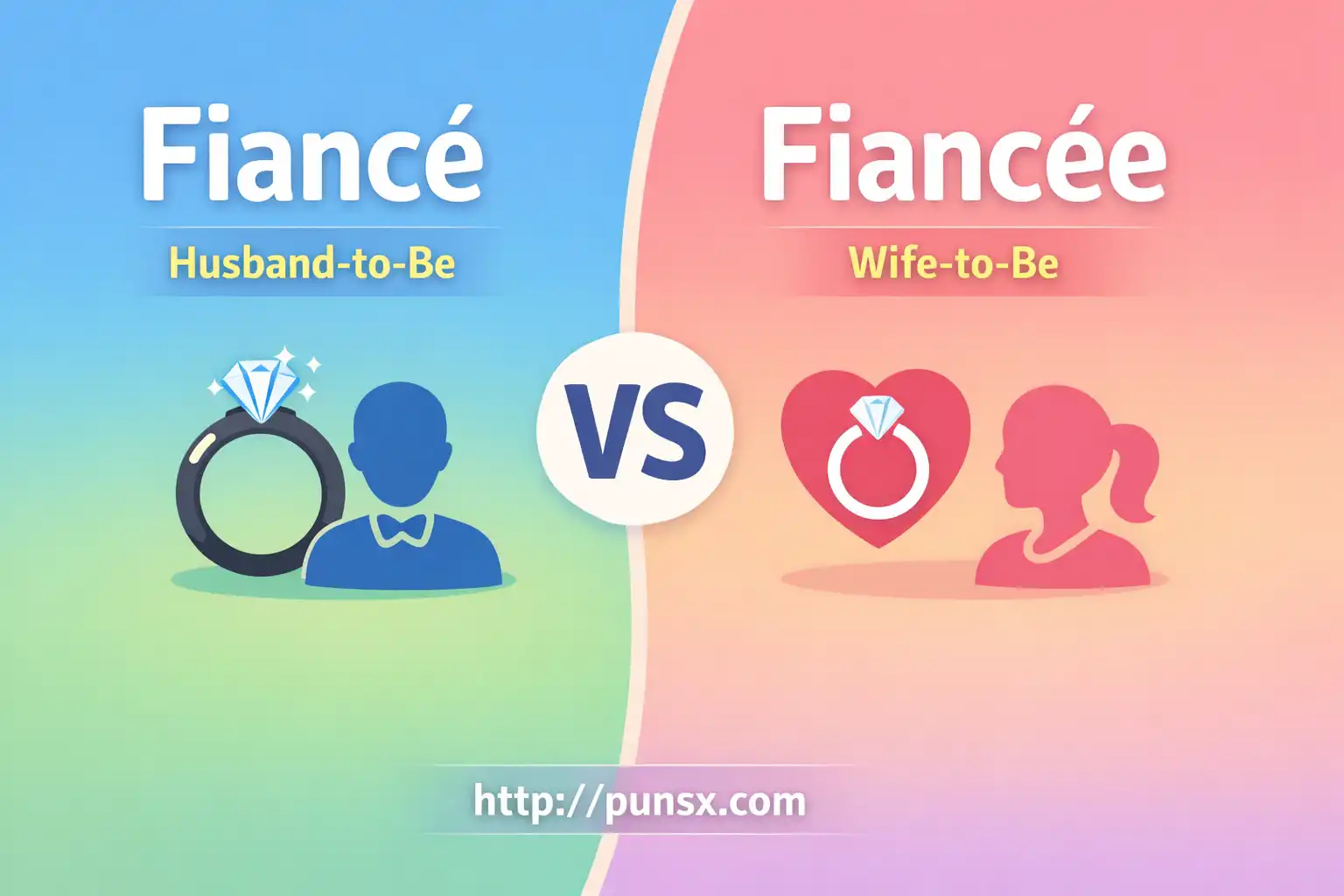
- Fiancé = a man who is engaged
- Fiancée = a woman who is engaged
Examples:
- She introduced her fiancé to her family.
- He talked about his fiancée at work.
Easy rule:
👉 One e for a man. Two e’s for a woman.
The Origin of Fiance or Fiancee
These words come from French, not English. That is the main reason for the confusion today.
In French, many words change spelling based on gender. English borrowed both forms. Over time, English kept them almost the same, including the small accent marks. However, many writers now drop the accents, especially online.
Originally:
- Fiancé (male form)
- Fiancée (female form)
Because English usually does not change spelling for gender, many people forget this rule. As a result, they use one spelling for everyone. That mistake is very common today.
British English vs American English Spelling
There is no real difference between British and American English here.
Both forms are used the same way:
- Fiancé → male
- Fiancée → female
However, usage style does change slightly.
- In formal writing, accents (é) are sometimes used.
- In modern digital writing, accents are often dropped.
So you may see:
- fiance / fiancee
- fiancé / fiancée
Both are accepted. Meaning stays the same.
Which Spelling Should You Use?
It depends on who you are writing for and how formal the text is.
- US audience
Use fiance or fiancée. Accents are optional. - UK or Commonwealth audience
Same rule applies. Accents are optional but acceptable. - Global or professional writing
Use the correct gender form. Accents are a nice touch but not required.
Most important point:
👉 Do not mix them up by gender.
Common Mistakes with Fiance or Fiancee
Here are mistakes editors often see:
❌ She talked about her fiancee (when referring to a man)
✅ She talked about her fiancé
❌ He posted a photo with his fiance (when referring to a woman)
✅ He posted a photo with his fiancée
Why this happens:
- The words look almost the same
- English rarely changes spelling by gender
- Many people never learned the original rule
Fiance or Fiancee in Everyday Examples
Emails
- “I will attend the event with my fiancée.”
- “Please meet my fiancé this Friday.”
News
- “The actor arrived with his fiancée.”
- “He proposed, and she is now his fiancée.”
Social Media
- “Weekend trip with my fiancé ❤️”
- “Counting days with my fiancée 💍”
Formal or Professional Writing
- “The award winner thanked his fiancée.”
- “His fiancé supported him during the project.”
Fiance or Fiancee – Usage Patterns & Search Interest
Search interest shows this is a high-confusion pair.
Most users searching this term are:
- ESL learners
- Students
- Wedding planners
- Writers and bloggers
A common real-life problem:
Someone writes a wedding announcement. They use the wrong form. A reader notices. The moment feels embarrassing.
That is why clarity matters here.
Comparison Table: Fiance vs Fiancee
| Feature | Fiance | Fiancee |
| Meaning | Engaged man | Engaged woman |
| Part of speech | Noun | Noun |
| Gender | Male | Female |
| Formal use | Yes | Yes |
| Informal use | Yes | Yes |
| Common mistake | Used for women | Used for men |
| Correct example | “Her fiancé smiled.” | “His fiancée waved.” |
FAQs About Fiance or Fiancee
Is fiance the same as fiancee?
No. Fiancé is male. Fiancée is female.
Which one is correct in formal writing?
Both are correct. You must choose based on gender.
Can they be used interchangeably?
No. They refer to different people.
Why do people confuse them?
Because English usually does not mark gender in spelling.
Can grammar tools catch this mistake?
Sometimes. Many tools miss it because both words are valid.
Is there a British vs American difference?
No. Both follow the same rule.
Conclusion
Overall, the confusion around fiance or fiancee comes from history, not difficulty. English borrowed both words from French and kept their gender difference. Many writers forget that detail today, but it still matters.
Use fiancé for a man.
Use fiancée for a woman.
That is the only rule you need.
In short, the mistake to always avoid is mixing the gender forms. Once you remember the number of “e’s,” the choice becomes easy. Finally, if you are ever unsure, pause and ask one simple question: Am I talking about a man or a woman? The spelling will follow naturally.

I’m Beau Taplin, the author behind PunsX.com, and I’m a passionate expert in clever, witty wordplay.
I create fun, shareable puns that turn simple ideas into smiles.