Many people stop when they write ensure or insure. Both words look similar. Both sound almost the same. But they do not mean the same thing. This confusion happens in emails, exams, articles, and even contracts. Students mix them up. ESL learners feel unsure. Even native writers pause and think.
The problem is simple. Both words come from the same root. Both suggest “making something safe.” So the brain treats them as one. But in real English, they do different jobs. This article fixes that problem.
You will learn what ensure means.You will learn what insure means and where mistakes happen and why they matter. Most importantly, you will learn one easy rule to never get confused again.
Ensure or Insure – Quick Answer
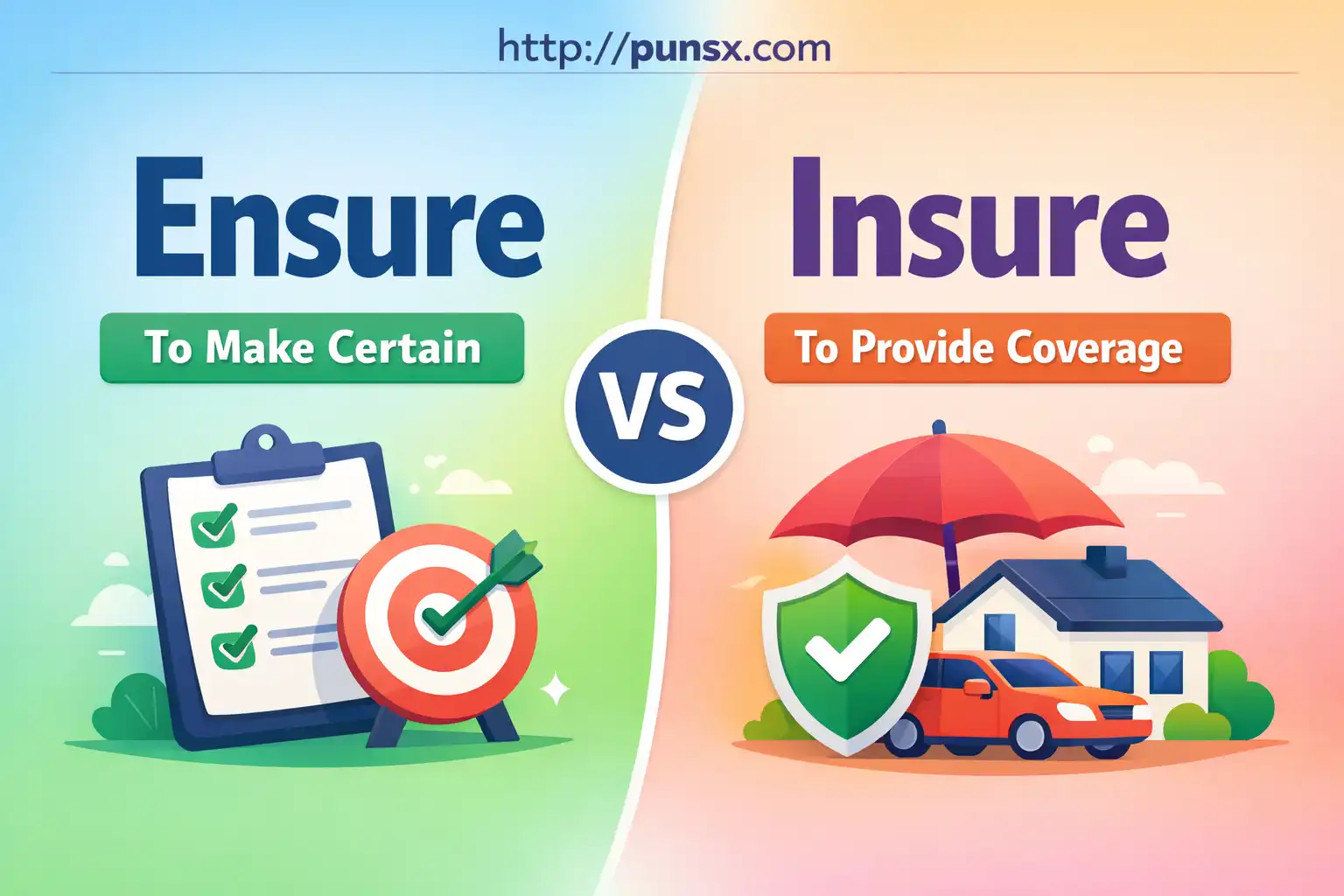
Ensure means to make sure something happens.
Insure means to protect with insurance.
- Use ensure for results, actions, or outcomes.
- Use insure for money, property, health, or risk.
Example:
- Please ensure the door is locked.
- The house is insured against fire.
Easy rule:
👉 If money or insurance is involved, use insure. Otherwise, use ensure.
The Origin of Ensure or Insure
Both words come from the same old source. That is why they confuse people today.
They come from the Old French word “enseurer.” It meant to make safe or secure. Over time, English split the meaning.
- Ensure stayed general.
It means to make sure something happens. - Insure became specific.
It means protection through insurance.
So the confusion is historical. The language changed, but the spelling stayed close. That is why writers still mix them up.
British English vs American English Spelling
Here is the good news.
There is no spelling difference between British and American English.
Both use:
- Ensure → to make sure
- Insure → to protect with insurance
However, there is one small usage note.
In British English, ensure is preferred more often. In American English, insure is used strictly for insurance. But the rule itself is the same everywhere.
Simple comparison
| Regio n | Ensure | Insure |
| US | Make sure | Insurance only |
| UK | Make sure | Insurance only |
So, spelling does not change.
Only meaning matters.
Which Spelling Should You Use?
The choice depends on context, not country.
Use ensure when:
- You mean make sure
- You talk about actions or results
- No money or insurance is involved
Use insure when:
- You talk about insurance
- Money, property, health, or risk is involved
- A policy or coverage exists
For global or professional writing:
- Follow the meaning strictly
- Editors expect this difference
- Grammar tools also check this
If you remember the meaning, the spelling solves itself.
Common Mistakes with Ensure or Insure
Writers often confuse these two in formal sentences.
Here are common errors and fixes.
❌ Please insure the report is ready on time.
✅ Please ensure the report is ready on time.
(No insurance involved.)
❌ He ensured his car last year.
✅ He insured his car last year.
(Car insurance needs insure.)
❌ This step will insure safety.
✅ This step will ensure safety.
(Safety as a result, not insurance.)
The mistake matters because it changes meaning.
In contracts or news, this can cause real confusion.
Ensure or Insure in Everyday Examples
Emails
- Please ensure all files are attached.
- We insured the shipment before delivery.
News
- The law aims to ensure fair elections.
- The building was fully insured after repairs.
Social Media
- Just double-check to ensure nothing is missing.
- Always insure your phone when traveling.
Formal or Professional Writing
- The policy helps ensure transparency.
- The company insured its assets against loss.
Each word fits a different job.
When you switch them, the sentence feels wrong.
Ensure or Insure – Usage Patterns & Search Interest
This confusion is very common. Students search it before exams. ESL learners search it while writing. Writers search it during editing.
Most searches happen because:
- Spellings look similar
- Meanings feel related
- Grammar tools sometimes miss context
A real-world problem appears in contracts. Using ensure instead of insure can change legal meaning. That is why editors watch this closely. So learning this difference is practical, not just academic.
Comparison Table: Ensure vs Insure
| Feature | Ensure | Insure |
| Meaning | Make sure something happens | Protect with insurance |
| Part of speech | Verb | Verb |
| Used for | Actions, results, outcomes | Money, property, health |
| Formal writing | Yes | Yes |
| Informal writing | Yes | Yes |
| Common mistake | Used for insurance | Used for general meaning |
| Correct example | Ensure accuracy | Insure the car |
This table alone can clear most confusion.
FAQs: People Also Ask
Is ensure the same as insure?
No.
Ensure means make sure.
Insure means protect with insurance.
Which one is correct in formal writing?
Both are correct.
But only when used in the right context.
Can ensure and insure be used interchangeably?
No.
They serve different purposes.
Why do people confuse ensure or insure?
Because they look similar and share history.
Can grammar tools catch this mistake?
Sometimes.
But context errors are often missed.
Is there a British vs American difference?
No spelling difference.
Only meaning matters.
What is the safest rule to remember?
If insurance is involved, use insure.
Otherwise, use ensure.
Conclusion
Overall, ensure or insure is a small choice with a big impact. Both words come from the same root, so confusion is natural. But modern English uses them very differently.
Use ensure when you mean make sure.
Use insure when you mean protect with insurance.
The biggest mistake is using insure for general results. That error appears often and sounds unprofessional. In short, ask one question before you write:
👉 Is insurance involved?
If yes, choose insure.
If not, choose ensure.
Finally, this one rule can save time, marks, and credibility. Once you remember it, this confusion is gone for good.