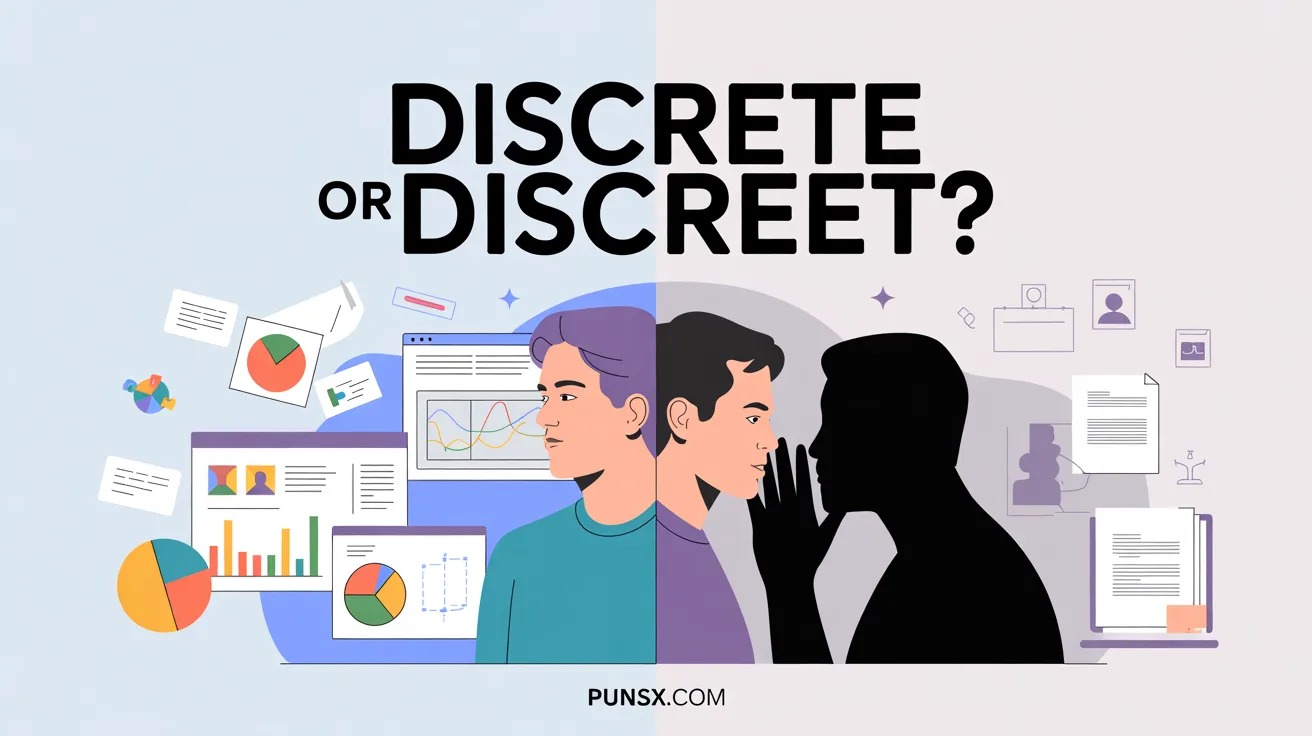
Use discrete when something is separate or distinct, and use discreet when someone is careful, private, or tactful.
If you’ve ever wondered if it’s discrete or discreet, you’re not alone. These two words sound almost identical but carry very different meanings.
One misstep can make your writing confusing or even embarrassing in professional emails, essays, or reports. That’s why so many people search for this keyword: they want a quick, clear explanation that actually sticks.
This article gives you that clarity. You’ll learn the difference, see real-world examples, discover common mistakes, and even understand the origins of the words. Along the way, we’ll show British vs American usage, usage tips for professional writing, and trends from Google that reveal how often people confuse these terms.
By the end, you’ll write confidently, avoid mistakes, and finally master discrete vs discreet.
Discrete or Discreet: Quick Answer
- Discrete: separate, distinct, or individual
- Example: The survey divides responses into discrete categories.
- Example: The survey divides responses into discrete categories.
- Discreet: careful, private, or tactful
- Example: She was discreet when discussing confidential information.
- Example: She was discreet when discussing confidential information.
Memory Tip:
- Discrete = Separate
- Discreet = Secret / Careful
The Origin of Discrete or Discreet
Both words originate from the Latin word discretus, meaning separated. Over centuries, English split them into two spellings with different meanings:
- Discrete: retained the sense of separated or distinct used in math, science, and logical contexts.
- Discreet: evolved to describe thoughtful or cautious behavior, especially socially or professionally.
This historical distinction explains why spelling matters: though they sound the same, meaning differs completely.
British English vs American English Spelling
Unlike many commonly confused words, the spelling is identical in both British and American English. The difference lies only in meaning, not region.
| Word | Meaning | UK English | US English |
| Discrete | Separate, distinct | Discrete | Discrete |
| Discreet | Careful, private | Discreet | Discreet |
Which Word Should You Use?
Always choose based on meaning:
- Discrete: for numbers, categories, data points, or items
- Example: Discrete variables are easier to analyze.
- Example: Discrete variables are easier to analyze.
- Discreet: for behavior, communication, or privacy
- Example: Please be discreet when sharing this information.
- Example: Please be discreet when sharing this information.
Professional tip: In business emails or academic writing, using the wrong word can make you look careless. Google favors content that is precise and credible just like your writing should be.
Common Mistakes with Discrete or Discreet
❌ He was very discrete about the plan.
✅ He was very discreet about the plan.
❌ The study uses discreet data points.
✅ The study uses discrete data points.
Most mistakes happen because writers rely on sound rather than meaning. Always double-check the context.
Discrete or Discreet in Everyday Examples
- Emails:
- Can you be discreet about this meeting?
- The report has discrete sections for each topic.
- Can you be discreet about this meeting?
- Social Media:
- Trying to stay discreet about my travel plans 👀
- These are discrete steps in my workflow.
- Trying to stay discreet about my travel plans 👀
- Formal Writing / Reports:
- Discrete data sets were analyzed separately.
- A discreet approach was recommended during negotiations.
- Discrete data sets were analyzed separately.
Discrete or Discreet: Trends & Usage Data
Search interest for discrete or discreet spikes during:
- Exam season (students check usage for essays and assignments)
- Writing and editing periods (bloggers, marketers, professionals)
According to Google Trends:
- Top countries: US, UK, Canada, Australia
- Search volume: consistently steady, showing strong ongoing interest
- Typical user intent: informational / educational
Google’s algorithm rewards articles that solve the query quickly, provide examples, and maintain clear structure, just like this one.
Comparison Table: Discrete vs Discreet
| Feature | Discrete | Discreet |
| Meaning | Separate, distinct | Careful, private |
| Context | Data, math, logic | Behavior, communication |
| Field | Academic, technical | Social, professional |
| Memory Tip | Separate | Secret / Cautious |
FAQs
1. Are discrete and discreet interchangeable?
No they have distinct meanings.
2. Which one is used for privacy?
Discreet.
3. Which one is used in math?
Discrete.
4. Do Americans and Brits spell them differently?
No, spelling is the same.
5. What’s a simple way to remember?
Discrete = separate; Discreet = secret / careful.
6. Can I use them in professional emails?
Yes, if you apply the meaning correctly.
7. Why do people confuse them?
Because they sound alike but have different semantic meanings.
Conclusion
Mastering discrete or discreet is simple once you focus on meaning, not sound.
- Use discrete for separated, individual items or categories.
- Use discreet for careful, private, or tactful actions.
This small difference can dramatically improve clarity in writing, boost your credibility, and even make your content more trustworthy to readers and Google alike.
With these examples, rules, and memory tips, you’ll never confuse these words again. Good writing isn’t about looking smart it’s about being understood, and now you are.