People often stop when they write this word. They pause. They think. Then they guess. Is it benefitting or benefiting? This small spelling choice causes big confusion, especially for students, ESL learners, and everyday writers. Even confident writers get stuck here, so you are not alone.
The problem happens because English spelling is not always logical. Some verbs double the final letter. Others do not. Spellcheck tools do not always help, and different websites give different answers. Because of that, many people search this keyword to be sure before they send an email, submit homework, or publish content.
In this guide, you will get a clear and simple answer. You will learn why the confusion exists, which spelling is correct, and how to choose fast without stress. By the end, you will have one easy rule you can always remember.
Benefitting or Benefiting – Quick Answer
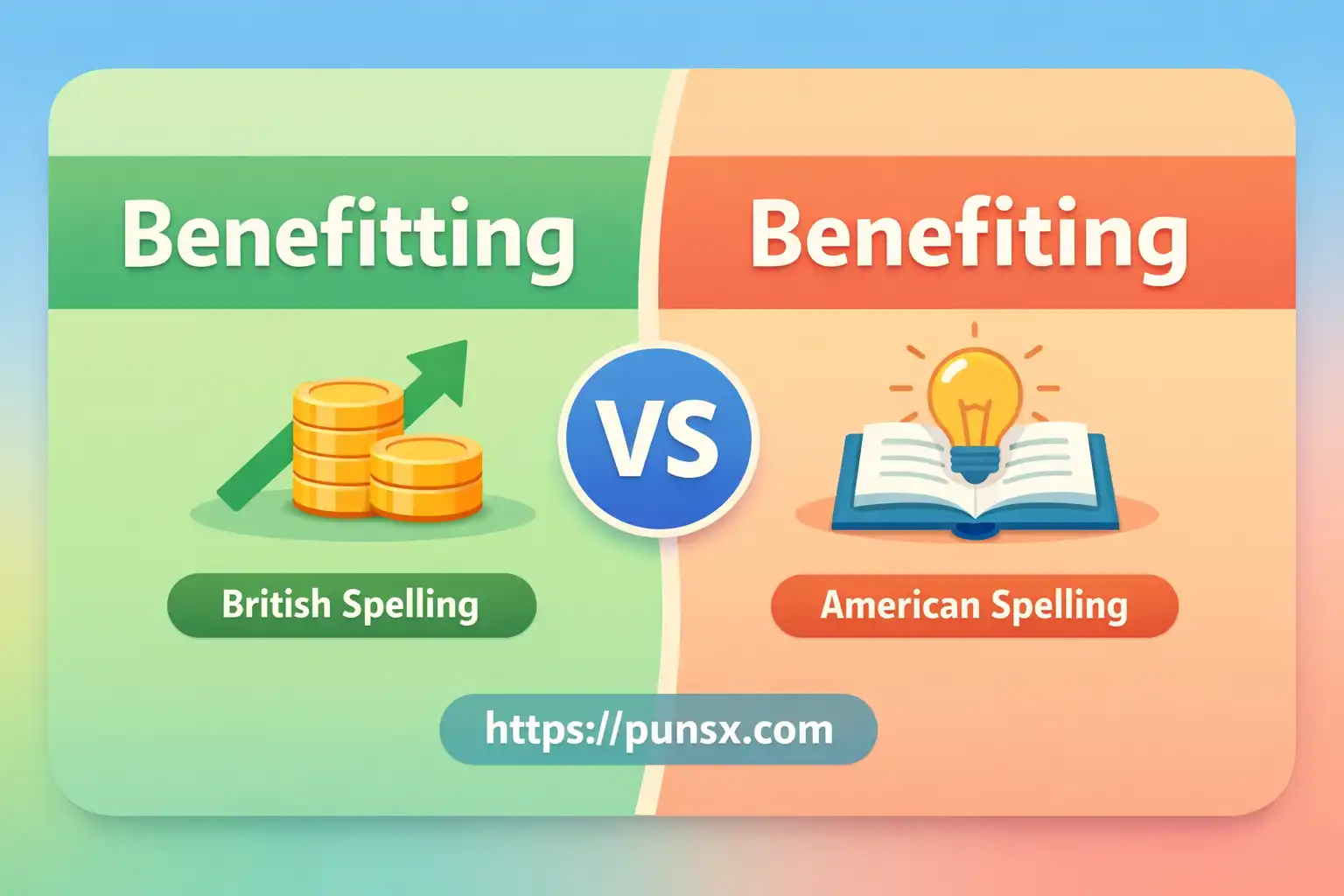
Both spellings are correct, but they depend on location.
- Benefiting is correct in American English
- Benefitting is correct in British English
Examples:
- The company is benefiting from new technology. (US)
- The community is benefitting from the program. (UK)
Easy rule:
Write for the US → use benefiting
Write for the UK → use benefitting
The Origin of Benefitting or Benefiting
The word benefit comes from Latin. It came into English through French, and it meant “a good deed” or “something helpful.” Over time, it became both a noun and a verb. As a verb, it means “to receive something good.”
The confusion started with spelling rules. In English, some verbs double the last consonant when adding -ing. Others do not. The rules depend on stress, syllables, and regional spelling habits. That sounds complex, and honestly, it is.
British English often doubles the final consonant when adding endings. American English usually avoids doubling unless it is clearly needed. Because of that, both spellings developed and stayed in use. Today, neither is wrong. They just belong to different systems.
British English vs American English Spelling
This difference is mainly about spelling style, not meaning. The word sounds the same. It means the same thing. Only the written form changes.
Key contrast:
- American English prefers simpler spellings
- British English keeps traditional doubling rules
Examples:
- US: benefiting, traveled, canceled
- UK: benefitting, travelled, cancelled
| English Type | Correct Spelling |
| American | benefiting |
| British | benefitting |
So the contrast is clear. The meaning stays stable, but the spelling follows local rules.
Which Spelling Should You Use?
The right choice depends on your audience. That is the most important point.
If you write for the US:
Use benefiting. This fits American schools, companies, media, and online platforms.
If you write for the UK or Commonwealth:
Use benefitting. This works for the UK, Australia, New Zealand, and similar regions.
If you write for a global or professional audience:
Pick one style and stay consistent. Many global brands choose American English, so benefiting is often safer. Still, consistency matters more than the choice itself.
Common Mistakes with Benefitting or Benefiting
Writers often make mistakes because they mix spelling styles or overthink the rule.
❌ Incorrect: The project is benefitting the US market.
✅ Correct: The project is benefiting the US market.
❌ Incorrect: She is benefiting from the programme. (UK context)
✅ Correct: She is benefitting from the programme.
Another common error is changing spelling in the same document. That looks careless and confuses readers. Pick one version and use it every time.
Benefitting or Benefiting in Everyday Examples
Seeing the word in real life helps a lot. Here are clear examples.
Emails
- I am benefiting from your advice. (US)
- We are benefitting from your support. (UK)
News
- The policy is benefiting small businesses.
- The policy is benefitting local families.
Social Media
- This app is benefiting my daily routine.
- This update is benefitting many users.
Formal or Professional Writing
- The research is benefiting future studies.
- The program is benefitting public health efforts.
In all cases, the meaning stays the same. Only the spelling changes.
Benefitting or Benefiting – Usage Patterns & Search Interest
Many people search this keyword because it feels uncertain. Students worry about grades. ESL learners want accuracy. Writers want to look professional. Editors see this mistake often, especially in international content.
Search interest usually spikes during school terms and exam seasons. It also rises when people write resumes, reports, or public posts. One real-world issue happens when a US company uses British spelling in official documents. Readers may think it is an error, even though it is not. That small detail can affect trust.
Comparison Table: Benefitting vs Benefiting
| Feature | Benefiting | Benefitting |
| Meaning | Receiving an advantage | Receiving an advantage |
| Part of Speech | Verb (present participle) | Verb (present participle) |
| Context of Use | American English | British English |
| Formal or Informal | Both | Both |
| Common Mistake | Using in UK writing | Using in US writing |
| Correct Example | She is benefiting from the change. | She is benefitting from the change. |
This table shows the truth clearly. The difference is regional, not grammatical.
Semantic FAQs (People Also Ask)
Is benefitting the same as benefiting?
Yes. They have the same meaning. The difference is spelling style.
Which one is correct in formal writing?
Both are correct. Use the version that matches your audience.
Can they be used interchangeably?
Not in the same document. Choose one style and stay consistent.
Why do people confuse them?
Because English spelling rules change by region and feel unclear.
Can grammar tools catch this mistake?
Sometimes, but tools may not know your target audience.
Is there a British vs American difference?
Yes. American English uses benefiting. British English uses benefitting.
Conclusion
Overall, the confusion between benefitting and benefiting is very common. It happens because English spelling follows different rules in different regions. That can feel frustrating, but the solution is simple once you know it.
In short, both spellings are correct. The meaning never changes. What matters is who you are writing for. American readers expect benefiting. British readers expect benefitting. Mixing them is the one mistake to always avoid.
Finally, remember this easy rule:
Match the spelling to your audience, then stay consistent.
If you follow that, you will never get this word wrong again.