Many people stop when they see aid and aide. The words look the same. They sound the same. So writers pause, guess, and move on. Later, they wonder if they were right.
This confusion happens in emails, school work, news posts, and even job titles. Students mix them up. ESL learners feel unsure. Even experienced writers sometimes pick the wrong one. Because of this, a small spelling choice can change the meaning of a sentence.
This article solves that problem in a clear and friendly way. You will learn what aid and aide mean, how they are different, and when to use each one. You will also see real examples from daily life. By the end, you will know a simple rule that makes the choice easy every time.
Aid or Aide – Quick Answer
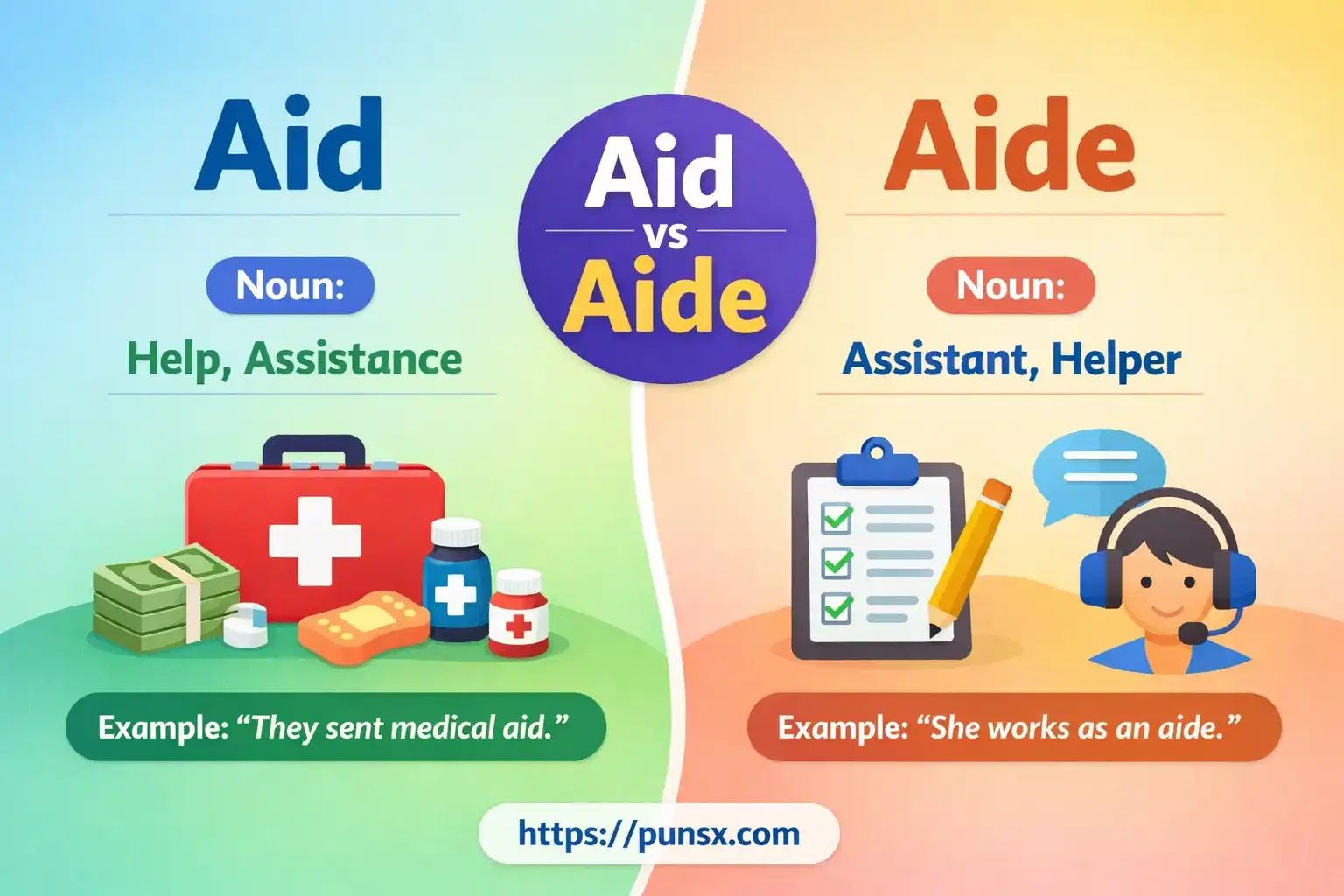
Aid and aide are not the same.
- Aid means help or support.
Example: She gave first aid. - Aide is a person who helps someone.
Example: The teacher’s aide helped the class.
Easy rule:
If it is help, use aid.
If it is a helper, use aide.
The Origin of Aid or Aide
The word aid comes from old French and Latin words that mean “to help.” It has been used in English for hundreds of years. Over time, people used it as both a noun and a verb. So you can give aid or aid someone.
The word aide also comes from French. It means “helper” or “assistant.” English kept this meaning. An aide is always a person. It is never an action.
The confusion started because both words sound the same. They are homophones. That means they share sound but not meaning. Writers often hear the word in their head, then guess the spelling. Because the difference is small, mistakes happen often today.
British English vs American English Spelling
There is no spelling difference between British and American English for aid or aide.
- Aid is spelled the same in all English types.
- Aide is also spelled the same everywhere.
However, usage stays strict. In contrast to some other words, these two do not change by country. So the only thing that matters is meaning, not location.
| Word | UK Usage | US Usage |
| aid | same meaning | same meaning |
| aide | same meaning | same meaning |
Which Spelling Should You Use?
The choice depends on meaning, not audience.
- For US readers:
Use aid for help. Use aide for a helper. - For UK or Commonwealth readers:
The rule stays the same. Meaning decides the word. - For global or professional writing:
Always check what you are talking about. Is it help, or is it a person?
If you focus on the role in the sentence, the right word becomes clear.
Common Mistakes with Aid or Aide
Writers often mix these words in fast writing. Here are common errors and fixes.
- ❌ She works as a medical aid.
✅ She works as a medical aide.
(A job is a person.) - ❌ The team needs more aide after the storm.
✅ The team needs more aid after the storm.
(They need help.) - ❌ He was trained in first aide.
✅ He was trained in first aid.
(This is help, not a person.)
These small mistakes change meaning. Editors usually catch them, but tools do not always do so.
Aid or Aide in Everyday Examples
Emails
- Please send aid to the support team.
- The manager’s aide will reply soon.
News
- Emergency aid arrived after the flood.
- The senator spoke with her senior aide.
Social media
- Donate aid to families in need.
- I met the mayor’s aide today.
Formal or professional writing
- The program provides legal aid.
- Each director has an executive aide.
Aid or Aide – Usage Patterns & Search Interest
People search this topic because the words sound the same and appear in daily life. Students see them in textbooks. ESL learners meet them in exams. Writers face them in emails and reports.
Search interest stays steady because the confusion never fully goes away. Grammar tools sometimes miss the error, since both words are correct spellings.
One real-world problem appears in job titles. Writing “press aid” instead of “press aide” can look careless. In news or resumes, that mistake can change how professional the text feels.
Aid or Aide Comparison Table
| Feature | Aid | Aide |
| Meaning | Help or support | A person who helps |
| Part of speech | Noun or verb | Noun only |
| Context of use | Actions, support, relief | Jobs, roles, assistants |
| Formal vs informal | Used in all levels | Used in all levels |
| Common mistake | Used for people | Used for help |
| Correct example | Humanitarian aid arrived | The nurse’s aide assisted |
Aid or Aide FAQs
Is aid the same as aide?
No. Aid is help. Aide is a person.
Which one is correct in formal writing?
Both are correct when used with the right meaning.
Can they be used interchangeably?
No. They have different roles.
Why do people confuse them?
They sound the same and look similar.
Can grammar tools catch this mistake?
Sometimes, but not always.
Is there a British vs American difference?
No. Usage stays the same everywhere.
Conclusion
Overall, aid and aide are easy once you slow down and check meaning. The confusion comes from sound, not from grammar rules. That is why so many people pause when they see these words.
Remember that aid is about help, support, or action. It can be something you give or something you do. Aide, in contrast, is always a person. It is a role, a job, or a helper next to someone else.
The one mistake to always avoid is using aid for a person or aide for help. That small swap can change how clear and professional your writing feels.
Finally, keep one simple rule in mind:
If you can replace the word with “help,” use aid. If you can replace it with “assistant,” use aide.

I’m Donna Ashworth, author at PunsX.com, and I’m an expert in writing clever, fun puns.
I turn everyday ideas into light, shareable humor people enjoy.