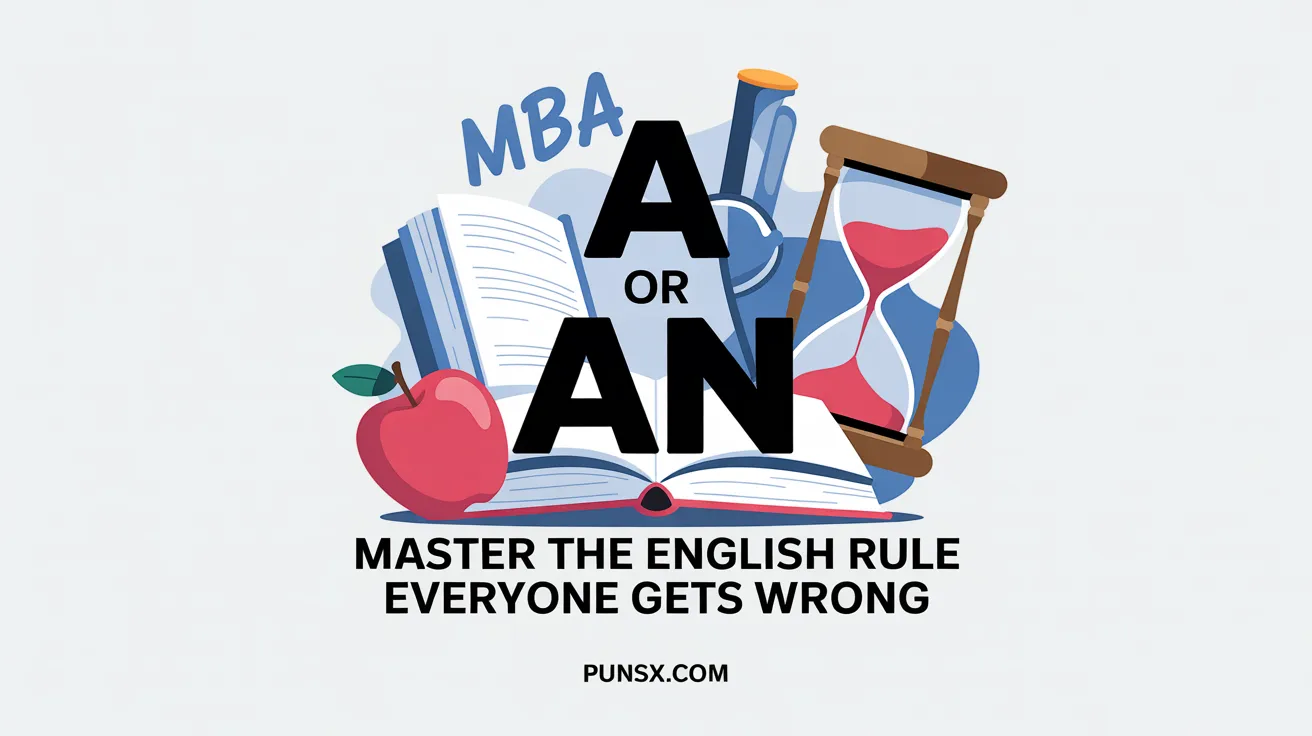
Use a before words that begin with a consonant sound and an before words that begin with a vowel sound.
The search for a or an usually starts with confusion. You learned the rule once a before consonants, an before vowels but then English does what it always does and breaks expectations. Why is it an hour but a university? Why an MBA but a CEO? These small details trip up students, writers, professionals, and even fluent speakers.
This confusion matters because articles appear everywhere: exams, emails, job applications, blog posts, headlines, and everyday messages. A single mistake can make writing sound awkward or non-native. That’s why people keep searching for a vs an, a or an rule, and a or an before vowels.
The real solution is simpler than most explanations suggest. English doesn’t care about spelling here, it cares about sound. Once you understand that, the rule becomes automatic.
This guide explains it clearly, with real examples and practical advice you can trust.
A or An : Quick Answer
Use a before a consonant sound
Use an before a vowel sound (a, e, i, o, u)
Simple examples:
- a book
- a university (sounds like you)
- an apple
- an hour (silent h)
- an MBA (starts with an em sound)
👉 Pronunciation decides. Not spelling.
The Origin of A or An
The articles a and an come from the Old English word ān, meaning one. In early English, an was used before all nouns. Over time, speakers dropped the n before consonant sounds because it made speech smoother.
For example, saying an apple flows naturally, while a apple feels awkward. The same logic removed n before consonant sounds, giving us a book instead of an book.
This history explains why the rule still follows spoken sound, not written letters. English grammar evolved from how people talked, not from strict spelling logic.
British English vs American English Usage
There is no spelling difference between British and American English when it comes to a or an. The rule is the same in both.
What can change is pronunciation, and that sometimes affects which article sounds natural.
| Word | British Usage | American Usage |
| herb | an herb (silent h) | an herb |
| historic | a historic / an historic | a historic |
| hotel | a hotel | a hotel |
If the pronunciation changes, the article may change. If it doesn’t, the article stays the same.
Which One Should You Use?
Choose based on how your audience says the word, not how it looks on the page.
- American audience: Follow common US pronunciation
- British or Commonwealth audience: Follow local speech patterns
- Global audience: Use the most widely accepted pronunciation
This approach works for:
- Exams and academic writing
- Professional emails
- Blog posts and SEO content
- News and formal documents
If it sounds like a vowel, use an.
If it sounds like a consonant, use a.
Common Mistakes With A or An
❌ an university → ✅ a university
❌ a hour → ✅ an hour
❌ an one-time offer → ✅ a one-time offer
❌ a MBA degree → ✅ an MBA degree
These errors happen when writers rely on spelling instead of pronunciation.
A or An in Everyday Writing
Emails
- I have an update for you.
- She is a valuable team member.
News & Media
- The company reported an unexpected loss.
- It was a historic decision.
Social Media
- Just had an amazing day!
- This is a once-in-a-lifetime opportunity.
Formal Writing
- He earned an MBA from a top university.
- The proposal introduces a new framework.
A or An: Usage Trends and Behavior
Search interest for a or an remains consistently high worldwide, especially in:
- English-learning regions
- Exam seasons
- Content publishing and blogging communities
Common search variations include:
- a vs an rule
- a or an before vowels
- a or an with abbreviations
This shows strong informational intent, meaning users want a fast answer first, followed by clear explanation exactly how this rule should be taught.
A or An Comparison Table
| Phrase | Correct Usage |
| apple | an apple |
| university | a university |
| hour | an hour |
| FBI agent | an FBI agent |
| one-day event | a one-day event |
Frequently Asked Questions
Is a or an based on spelling or sound?
Sound. Always sound.
Why is it an hour?
Because the h is silent.
Is it a MBA or an MBA?
An MBA, because M is pronounced em.
Do acronyms follow the same rule?
Yes. Use the spoken letter sound.
Does British English use different rules?
No. Only pronunciation differences matter.
What about words starting with u?
If it sounds like you, use a.
Conclusion
The a or an rule feels confusing only when it’s taught the wrong way. English articles don’t follow spelling they follow sound. Once you understand that, the rule becomes easy and reliable.
If you’re writing an exam answer, a professional email, a blog post, or a headline, choosing the correct article instantly improves clarity and confidence. It also helps your writing sound natural and fluent, which matters to readers and search engines alike.
A simple habit makes all the difference: say the word out loud before you write it. If the sound starts with a vowel, use an. If it starts with a consonant, use a. Master this habit, and one of the most common English grammar problems disappears for good.

I’m Donna Ashworth, author at PunsX.com, and I’m an expert in writing clever, fun puns.
I turn everyday ideas into light, shareable humor people enjoy.