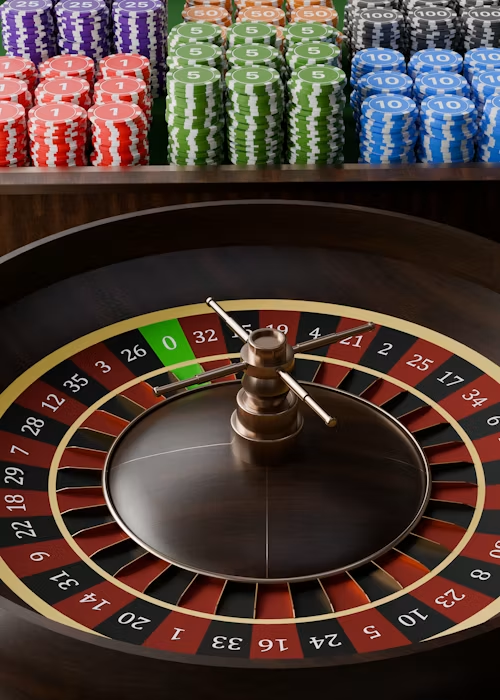
Number-based lottery games have existed in different forms for generations. Their rules may vary by country or platform, but the basic idea is usually straightforward: participants select numbers and wait to see whether those numbers match an official result.
The simplicity of the format can make these games look easier to understand than they actually are. Behind every draw are probability, randomness, payout structures, local regulations, and financial risks that deserve attention.
In parts of Southeast Asia, the term togel is commonly associated with number-prediction lottery gambling. Someone researching the subject may be looking for an explanation of how these games operate, why they attract participants, or what risks should be considered before money is involved.
This guide focuses on those practical questions without treating gambling as a reliable way to earn money.
How Number Lottery Games Usually Work
The exact format depends on the operator and jurisdiction. In a typical number lottery, a participant chooses one number or a combination of numbers before a specified deadline.
A draw then produces the winning result. If the selected combination meets the game’s winning conditions, the participant may receive a payout according to predetermined rules.
Some formats involve two-digit, three-digit, or four-digit selections. Others introduce several prize levels based on how closely a selection matches the final result.
Despite these differences, one principle remains important: legitimate random draws cannot be reliably predicted from previous results.
A number appearing frequently in previous draws does not necessarily make it more likely to appear in the next independent draw.
Why Probability Matters More Than Patterns
People naturally search for patterns. If a certain number has appeared several times, it can be tempting to believe that it is “hot.” If another number has not appeared recently, someone may assume it is “due.”
Neither belief changes the mathematics of a genuinely independent random draw.
Imagine a simple game where one exact number must be selected from 1,000 possible combinations. If every combination has an equal chance, the probability of selecting the correct one is 1 in 1,000.
Past results do not automatically improve those odds.
This distinction matters because historical charts can describe what already happened without reliably telling you what will happen next.
Pros and Cons of Number Lottery Games
Understanding both sides gives you a more realistic view of these games.
Potential Advantages
• Rules are often relatively simple to understand.
• Participants usually know the amount they are risking before entering a draw.
• Some people view occasional lottery participation as entertainment rather than an investment.
• Fixed draw schedules can make results straightforward to verify when the game is properly regulated.
Potential Disadvantages
• The probability of winning meaningful prizes may be very low.
• Repeated small bets can become a significant expense over time.
• Previous winning numbers cannot reliably forecast future random results.
• Unlicensed operators can create additional risks involving payments, fairness, privacy, and withdrawals.
• Chasing previous losses can lead to increasingly poor financial decisions.
The most important disadvantage is the mathematical one. A game can produce occasional winners while still being structured so that participants collectively lose money over the long term.
Common Misunderstandings About Lottery Predictions
One reason number lotteries attract so much analysis is that random outcomes often create patterns by coincidence.
For example, imagine the same digit appearing several times during a short period. That sequence may look meaningful. In reality, unusual-looking clusters can occur naturally within random data.
Another common misunderstanding is believing that a long absence makes a number more likely to appear.
Suppose a fair coin produces heads five times consecutively. The next flip does not “owe” you tails. Its probability remains based on the next independent event.
The same basic principle applies to many properly randomized lottery systems.
What to Check Before Trusting a Lottery Platform
Research becomes particularly important when a lottery or gambling service operates online.
You should look beyond attractive payout claims and examine who actually operates the service.
Useful points to investigate include:
• Whether gambling is legal in your jurisdiction
• Whether the operator holds a recognized license
• How winning results are generated and verified
• Whether payout rules are clearly published
• What identity and payment information the platform collects
• Whether withdrawal conditions are transparent
• What responsible gambling controls are available
Licensing deserves particular attention. An attractive website does not prove that an operator is regulated or that deposited funds receive meaningful consumer protection.
Expert Tips for Evaluating Number-Based Gambling
The strongest approach is to separate entertainment from financial planning.
Never treat a random lottery result as predictable income. If participation is legal where you live and you choose to take part, establish a fixed entertainment budget before spending anything.
You should also be skeptical of people claiming to have guaranteed winning formulas.
No spreadsheet, prediction group, secret sequence, or historical chart can guarantee the outcome of a genuinely random draw. Claims that a togel system can consistently produce certain winning numbers should therefore be evaluated critically rather than accepted because of a few successful examples.
Another useful habit is keeping records of spending instead of remembering only wins. People often remember an unusually good result while overlooking dozens of smaller losses.
A written record gives you a more accurate picture.
The Role of Responsible Gambling
Responsible gambling starts with recognizing what the activity is and what it is not.
Lottery participation should not replace savings, employment income, investing, or a financial emergency plan. Money needed for rent, food, bills, education, debt payments, or other essential expenses should remain separate.
It is also worth establishing limits before playing rather than after losing.
Useful boundaries can include a spending limit and a fixed amount of time. Once either limit is reached, stop rather than increasing the next wager in an attempt to recover earlier losses.
Key Takeaways
• Number lotteries are based primarily on probability and chance.
• Historical results do not guarantee future winning combinations.
• Random events can create patterns that appear more meaningful than they really are.
• Regulation and licensing should be checked before trusting an online operator.
• Guaranteed prediction claims deserve strong skepticism.
• Gambling expenses should remain separate from essential household finances.
• Keeping an accurate spending record provides a clearer view of actual gains and losses.
• Local laws should always be checked because gambling regulations vary significantly between jurisdictions.
Conclusion
Number-based lottery games may appear simple, but understanding them properly requires more than knowing how to select a few digits. Probability, regulation, operator credibility, payout structures, and personal spending habits all affect the bigger picture.
The most useful approach is to view lottery participation through facts rather than prediction myths. Historical results can be interesting to examine, but they cannot turn an independent random event into a reliably predictable one.
If you research these games, focus on how the system works, whether it is legally regulated, and what financial risks are involved. That gives you information you can actually use rather than relying on patterns that may exist only by chance.