The terms “Miss” and “Mrs” are often used to address women, but many people still confuse the two. Is there a real difference? Why do we see these titles being used interchangeably, and how can you make sure you’re using the right one in the right context? This article breaks down the origins, uses, and common mistakes with these terms to clear up any confusion.
You’re not alone if you’ve ever wondered about the difference between “Miss” and “Mrs.” It’s common for people to get these titles mixed up, especially if they’re unsure about which one to use. This confusion usually happens in formal writing or addressing someone in person. It’s important to get it right, as it’s a sign of respect. Let’s dive into the background of these terms and show you when and where to use them correctly.
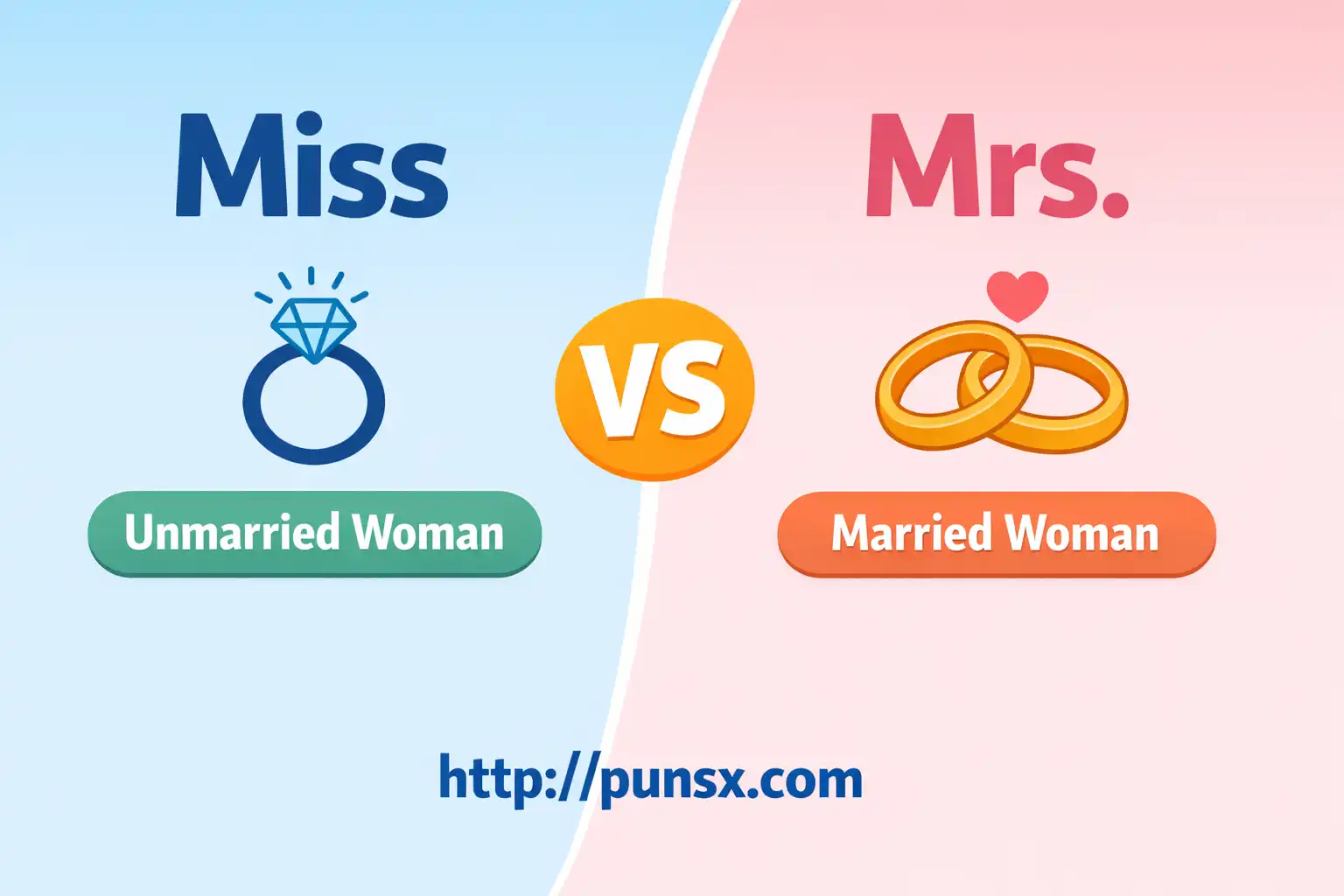
Miss vs Mrs – Quick Answer
- Miss is used to refer to an unmarried woman.
- Mrs. is used to refer to a married woman.
Quick decision rule: Use “Miss” if you know someone is unmarried, and “Mrs.” if they are married.
The Origin of Miss vs Mrs
Word Origin and Background
The word “Miss” has been around since the 17th century. It was used to describe young women or girls who were unmarried. Over time, it became a title specifically for women who hadn’t yet married, often used for children or young adults.
“Mrs.,” on the other hand, is derived from “Mistress,” which was used to refer to a married woman. The term was common in English until it evolved into “Mrs.” in the 18th century. It originally referred to a woman who was married and used to imply her social status.
Reason for Confusion Today
In today’s world, people often misuse these titles, leading to confusion. Some people use “Miss” for all women, regardless of marital status, while others use “Mrs.” out of habit without considering whether someone is married. This is especially common when dealing with formal occasions, business settings, or international communications.
This confusion arises because, for many years, “Miss” and “Mrs.” were used in a very specific way. Today, however, many women prefer not to be defined solely by their marital status, leading to a more flexible approach in using these terms.
British English vs American English Spelling
Clear Spelling Rules
While “Miss” and “Mrs.” are universally used, there are some regional differences between British and American English spelling, though these terms themselves don’t change. The difference comes into play in other titles like “Ms.”
In British English, the title “Miss” is commonly used for unmarried women, and “Mrs.” for married women. Both terms are also used for young girls in some cases. In American English, “Miss” and “Mrs.” are equally common, but some Americans are now opting for the neutral title “Ms.” to avoid confusion about marital status.
Short Examples
- British: “Miss Emily White” (unmarried)
- American: “Mrs. Sarah Johnson” (married)
Small Comparison Table
| Title | Meaning | Part of Speech | Context of Use | Formal/Informal | Common Mistakes |
|---|---|---|---|---|---|
| Miss | Unmarried woman | Noun | Personal | Informal | Using it for married women |
| Mrs. | Married woman | Noun | Formal | Formal | Confusing it for unmarried women |
Which Spelling Should You Use?
Audience-Based Guidance
- US English: “Miss” and “Mrs.” are both common, but the trend is leaning towards using “Ms.” for clarity in professional settings.
- UK / Commonwealth: Both “Miss” and “Mrs.” are widely used, but the trend is moving towards “Ms.” as well.
- Global / Professional Writing: If you’re writing for a professional audience, especially globally, using “Ms.” can be more neutral and respectful.
If the spelling of “Miss” or “Mrs.” doesn’t vary, the choice depends on the context. For instance, use “Miss” if someone is unmarried and “Mrs.” if they are married. But if you’re unsure, or if the marital status is irrelevant, using “Ms.” is a safe, respectful choice.
Common Mistakes with Miss vs Mrs
Frequent Errors
- Incorrect: Referring to a married woman as “Miss” because you’re unsure of her marital status.
- Correct: “Mrs.” should only be used for married women.
Another mistake is assuming all women who are married use “Mrs.” This isn’t always the case; some married women prefer “Ms.” as it doesn’t highlight their marital status.
❌ Incorrect → ✅ Correct Format
- Miss Emily White (unmarried)
- Mrs. Emily White (married)
- Ms. Emily White (married or unmarried)
Miss vs Mrs in Everyday Examples
Usage in Emails
- Miss: “Dear Miss Taylor, I hope this email finds you well.”
- Mrs.: “Dear Mrs. Smith, I would like to follow up on our last conversation.”
News
- Miss: “Miss Jessica Jones, the 2026 Olympian, is expected to compete in the finals.”
- Mrs.: “Mrs. Sarah Brown will lead the panel discussion on gender equality.”
Social Media
- Miss: “Congratulations to Miss Emma Watson for her outstanding performance!”
- Mrs.: “Thank you, Mrs. Lily Collins, for the inspiring speech at the event.”
Formal or Professional Writing
In formal settings, always choose “Mrs.” for married women unless the woman prefers “Ms.” If you’re unsure of someone’s preference, “Ms.” is the best option.
Miss vs Mrs – Usage Patterns & Search Interest
General Popularity Trends
The search interest for “Miss” and “Mrs.” tends to peak during wedding seasons, where people are unsure about using the correct title for invitations and formal events. There’s also increasing interest in the term “Ms.” as people look for a neutral alternative.
Typically, ESL learners and students are the largest group of users who search for the differences between these titles. They often struggle with knowing when to use one term over the other in formal writing, emails, and social situations.
One Real-World Scenario
In a professional setting, if a business email mistakenly refers to a married woman as “Miss,” it can be seen as disrespectful. This could confuse both the person receiving the email and the person being addressed.
Comparison Table: Miss vs Mrs
| Title | Meaning | Part of Speech | Context of Use | Formal/Informal | Common Mistakes | Correct Example |
|---|---|---|---|---|---|---|
| Miss | Unmarried woman | Noun | Personal | Informal | Using it for married women | Miss Emily White (unmarried) |
| Mrs. | Married woman | Noun | Formal | Formal | Confusing it for unmarried women | Mrs. Emily White (married) |
FAQs
- Is Miss the same as Mrs?
- No, “Miss” refers to an unmarried woman, while “Mrs.” refers to a married woman.
- Which one is correct in formal writing?
- “Mrs.” is used for married women, but “Ms.” can be used for both married and unmarried women.
- Can they be used interchangeably?
- No, they have different meanings and should not be used interchangeably.
- Why do people confuse them?
- People often confuse these terms because both can be used to address women, and they’re unsure of marital status.
- Can grammar tools catch this mistake?
- Yes, some grammar tools can catch this, but it’s always best to check someone’s preference.
- Is there a British vs American difference?
- Both terms are used in the UK and the US, but “Ms.” is becoming more common to avoid mentioning marital status.
Conclusion
In summary, “Miss” and “Mrs.” are two distinct titles that refer to a woman’s marital status. “Miss” is for unmarried women, while “Mrs.” is for married women. However, if you’re ever unsure about a woman’s marital status, “Ms.” is the safest and most neutral choice.
Remember, the key mistake to avoid is using “Miss” for a married woman. To keep things simple, always ask yourself if the woman is married or unmarried, and choose the title accordingly.

I’m Beau Taplin, the author behind PunsX.com, and I’m a passionate expert in clever, witty wordplay.
I create fun, shareable puns that turn simple ideas into smiles.