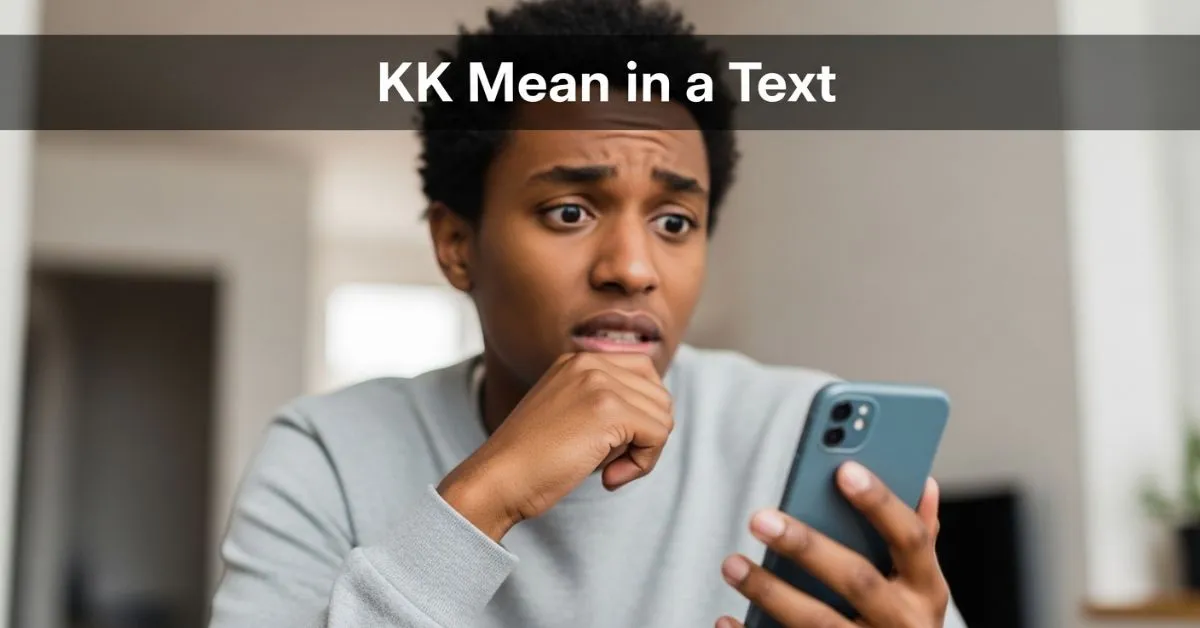
I still remember the first time someone replied to me with just “kk.” I had sent a full message explaining plans, and all I got back was… “kk” 😅. I stared at my phone thinking, is that good? bad? are they annoyed?
It felt so short that I couldn’t tell the tone at all. If you’ve ever felt the same confusion, you’re not alone. “KK” is super common in texting, but its meaning can depend a lot on how it’s used and who sends it.
Quick Answer:
KK means “Okay.” It’s a casual and quick way of agreeing or acknowledging something in text.
🧠 What Does KK Mean in Text?
In texting, KK simply means “Okay.” It’s basically a shorter, faster version of:
- OK
- Okay
- K
People use “kk” to:
- Show agreement 👍
- Confirm they understood ✔️
- Acknowledge a message quickly 💬
📌 Example:
“meet me at 6”
“kk”
👉 Here, “kk” means “okay, got it.”
💡 Compared to just “k,” which can sometimes feel cold or rude, “kk” feels slightly more friendly and softer.
In short:
KK = Okay = Quick agreement or acknowledgment
📱 Where Is KK Commonly Used?
You’ll see KK mostly in casual conversations where speed matters.
📍 Popular platforms:
- 💬 Text messages (SMS, WhatsApp)
- 👻 Snapchat
- 🎵 TikTok DMs
- 📸 Instagram chats
- 🎮 Gaming chats
💡 Tone:
- Casual and informal
- Neutral to slightly friendly
- Can feel dry if overused
👉 It’s not slang with a deep meaning just a quick response shortcut.
💬 Examples of KK in Conversation
Here are some real chat-style examples:
1. Simple agreement
- A: “i’ll call you later”
- B: “kk 👍”
2. Confirming plans
- A: “movie at 8?”
- B: “kk sounds good”
3. Quick acknowledgment
- A: “don’t forget your keys”
- B: “kk”
4. Group chat reply
- A: “meeting moved to 3”
- B: “kk got it”
5. Slightly friendly tone
- A: “see you tomorrow”
- B: “kk 😊”
6. Dry response
- A: “i wrote a long message explaining everything”
- B: “kk”
😅 (This one can feel a bit cold depending on tone!)
7. Gaming chat
- A: “defend this side”
- B: “kk”
🕓 When to Use and When Not to Use KK
✅ When to Use KK
- In quick, casual replies
- When confirming simple plans
- With friends or familiar people
- In group chats
- When speed matters more than tone
❌ When Not to Use KK
- In formal conversations
- When someone sends a long or emotional message
- In professional emails
- When you want to sound warm or expressive
- In serious discussions
📊 Comparison Table
| Context | Example Phrase | Why It Works |
| Friend Chat | “kk see you soon 😄” | Casual & friendly |
| Group Chat | “kk noted” | Quick acknowledgment |
| Work Chat | “Okay, I understand.” | Professional & polite |
| “Thank you, I will proceed.” | Formal & clear |
🔄 Similar Slang Words or Alternatives
| Slang | Meaning | When to Use |
| ok | Okay | Neutral everyday use |
| k | Okay (very short) | Quick reply (can feel cold) |
| got it | Understood | Clear acknowledgment |
| sure | Agreement | Friendly confirmation |
| yep | Yes | Casual and positive tone |
| alright | Okay/accepted | Slightly more expressive |
FAQs❓
1. Is KK rude in texting?
Not usually, but it can feel dry or uninterested depending on context.
2. What’s the difference between “k” and “kk”?
“kk” feels slightly more friendly, while “k” can seem cold.
3. Is KK formal or informal?
It’s informal and best used in casual chats.
4. Can KK be flirty?
Not really. It’s neutral and doesn’t carry a flirty tone.
5. Why do people use KK instead of OK?
It’s faster to type and feels a bit more relaxed.
6. Can KK end a conversation?
Yes, sometimes it can signal the conversation is wrapping up.
Conclusion
“KK” might look tiny, but it plays a big role in everyday texting. It’s all about quick acknowledgment and simple agreement.
Just remember tone matters. While “kk” works perfectly in fast, casual chats, it can sometimes feel too short in deeper conversations.
So next time someone sends you “kk,” don’t overthink it… it usually just means “okay, got it” 😄
Discover More Articles:
- What Does BFS Mean in Text : Explained With Examples💬(2026)
- RS Mean in Text : Full Form, Examples & Tips💬(2026)
- ISMG Mean in Text : A Complete Guide💬(2026)
I’m James Baldwin, author at PunsX.com, and I’m an expert in crafting clever, shareable puns.
I turn simple ideas into fun wordplay that makes people smile.